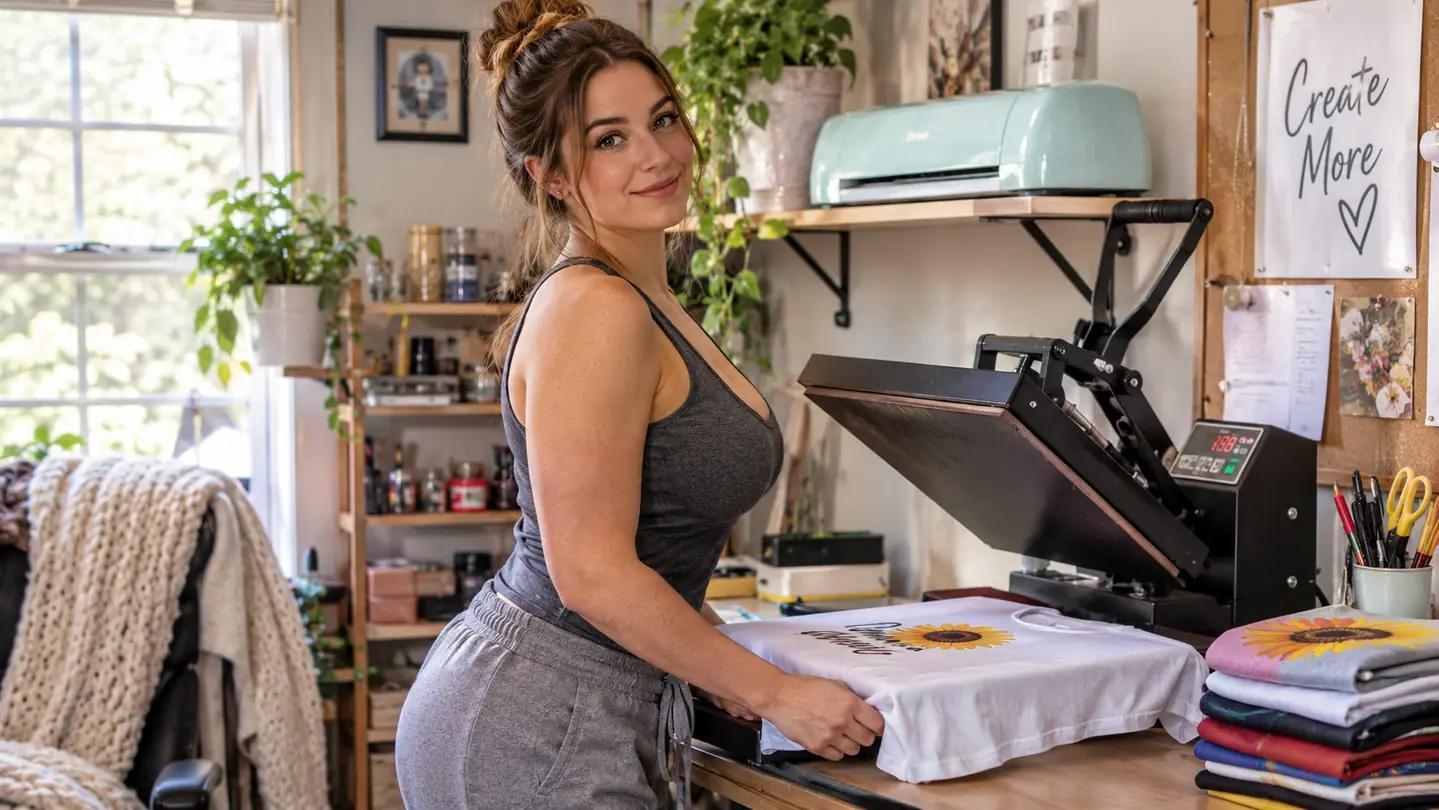
The first cutting machine I bought for heat transfer vinyl work did not fit my press room. It sat on a folding table in the corner, and every time I needed to load a shirt on the heat press I moved it out of the way first. I did that for a year. Then I borrowed a small machine for a weekend of booster club shirts and never went back. The Cricut Joy Xtra weighs 250 grams and gives you 95.94 square inches of active cutting surface. That is not a number that sounds impressive until you work out that every youth jersey order I take fits inside it. Here are ten reasons a Cricut cutter in this size suits this kind of work.
Most people shopping for a first cutting machine assume bigger is safer. I did. What I actually needed was something that cut iron-on vinyl cleanly, sat within arm's reach of the heat press, and did not eat a corner of the room I need for pressing. Everything below is grounded in what the machine is listed as doing, plus what I have found over four years of weekend fairs and school orders. If your work is shirts, team wear, mugs and small gifts, read this before you buy anything wider.
The machine that fits beside the heat press instead of taking its corner
Ninety-five square inches of cutting surface, 250 grams, and 50+ materials including iron-on HTV. That is the whole footprint my press room can spare.
Amazon Check Today's Price on Amazon →It cuts 50+ materials, including every vinyl I actually use
The Cricut listing puts the machine at 50+ materials, and for this work the ones that matter are iron-on HTV, adhesive vinyl, cardstock and sticker paper. I keep two drawers in the press room. One holds HTV in the school colors I get asked for, and one holds cardstock and sticker sheets for the mugs and gift tags. That is my entire material inventory. In four years I have never taken an order that needed a third drawer, and I have never had to send a job out.
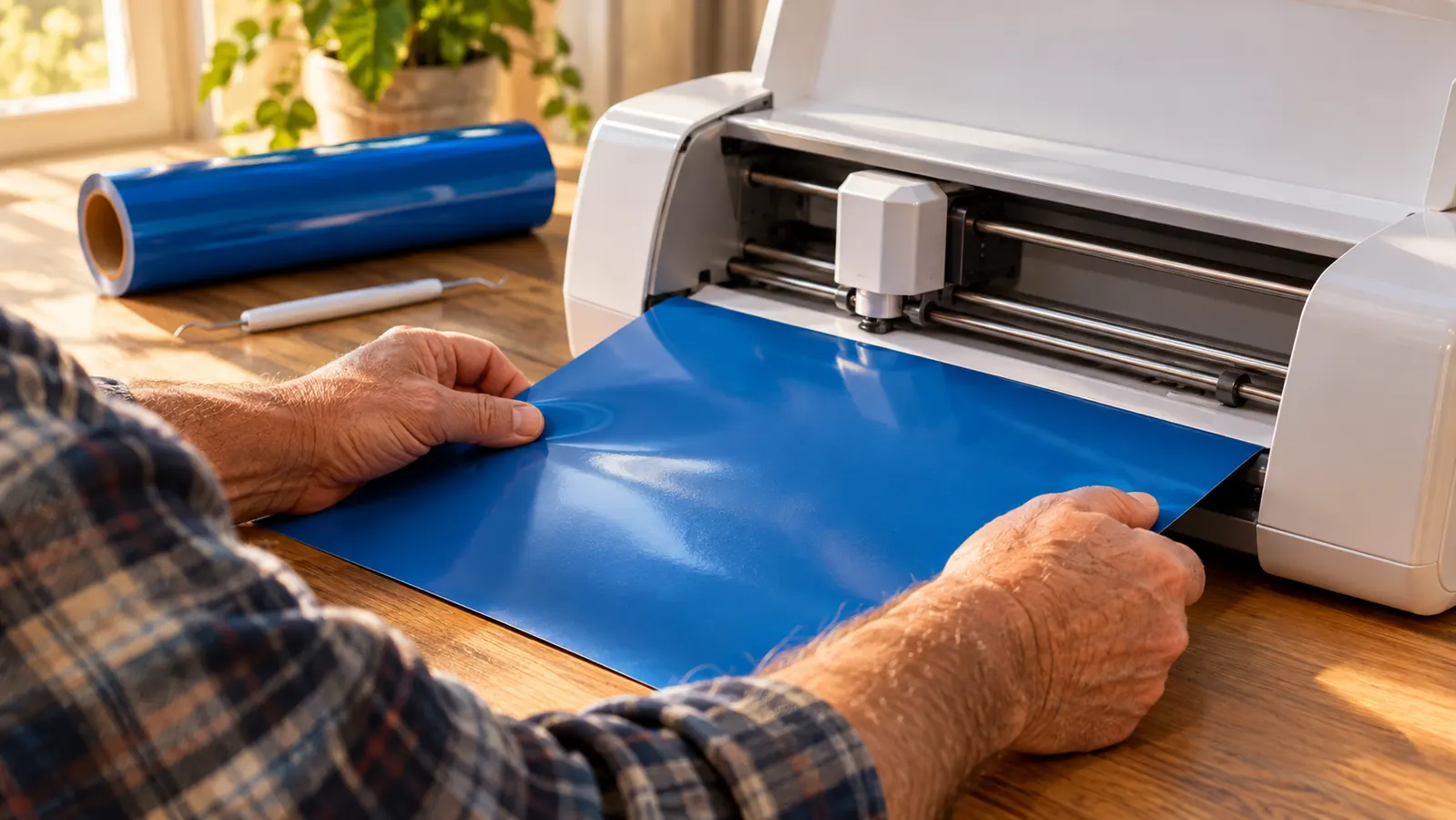
A full youth jersey design fits the 95.94 square inch cutting area
This is the number that decided it for me. The active surface area is 95.94 square inches, which handles a youth jersey front, an adult left chest design, or a run of mug wraps cut side by side. What it will not do in one pass is a full adult back print, and I want to be straight with you about that. Those I split into two cuts and line up on the press. It costs me an extra few minutes and no customer has ever spotted a seam.
At 250 grams it stays where you work instead of where you store things
The item weight is 250 grams. That reads like a spec sheet detail until you have carried a heavy machine across a room forty times in a weekend. Mine sits on the narrow counter beside the heat press and I lift it with one hand when I need that counter for a pressing mat. When a craft fair is over it goes in the same tote as the vinyl scraps. Packing the car for a Saturday market does not require Glen to make two trips.
Print-Then-Cut handles the multi-color team logos
The machine is listed as compatible with inkjet printers for Print-Then-Cut, and that is the feature that made booster club work possible for me. I print a full color design onto printable material with my inkjet, then the Cricut cuts around the printed shape. Multi-color logos, spirit badges, photo gifts. Before this I was layering three colors of HTV and hoping the registration held. Layering still has its place for bold two-color designs. Print-Then-Cut is what I reach for when a logo has more than two colors in it.
The fine-point blade gets small lettering right
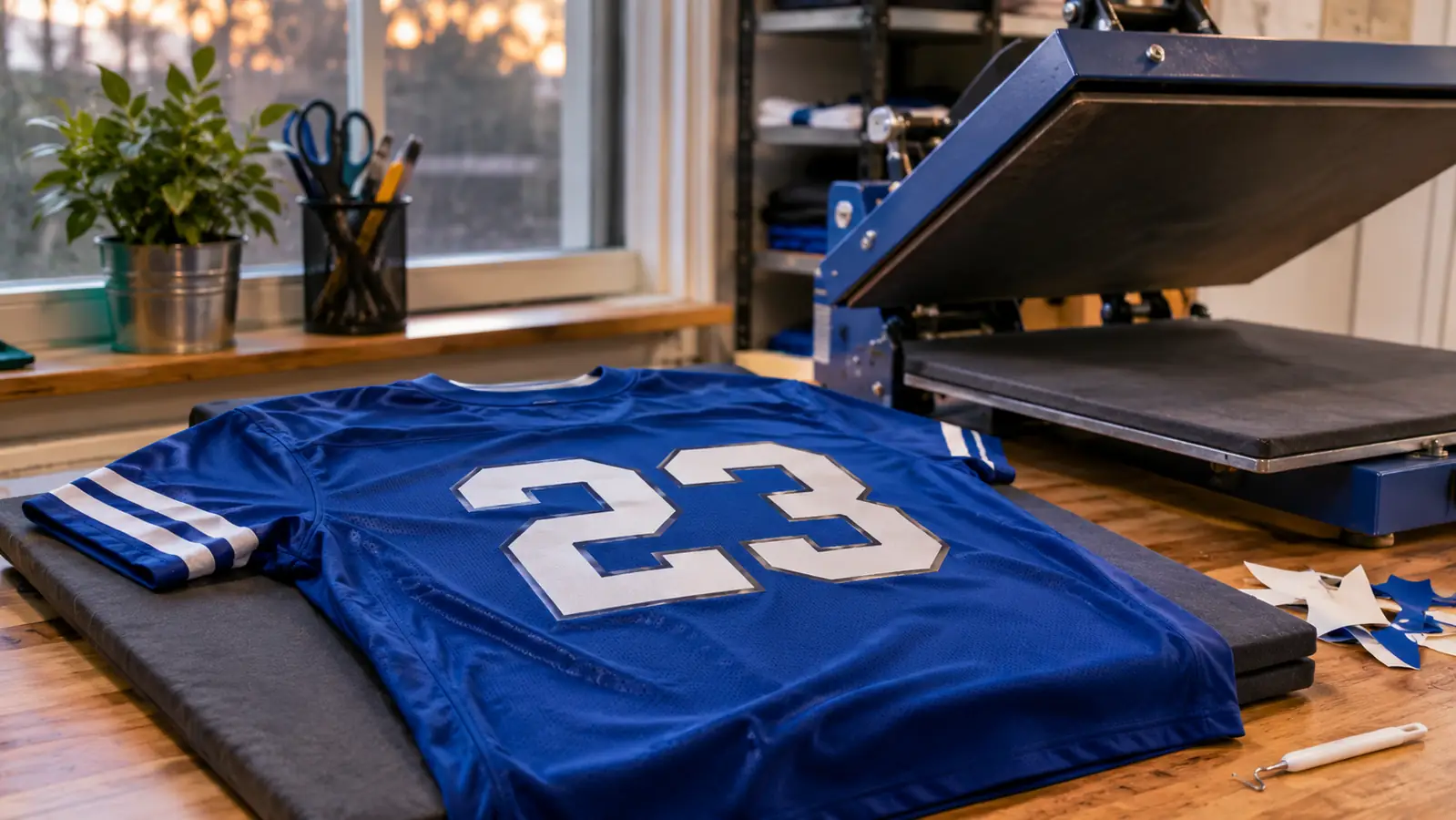
The Fine-Point Blade comes in the box and it is the blade I use for almost everything. Small lettering is where a cheap cut shows. Name tapes, jersey numbers, the small print under a team name. Cut too hot or peel too fast and the letters tear or lift off the backing. With the fine-point blade and a good sheet of HTV, twelve-point lettering on a youth jersey comes off clean. I have cut hundreds of name tapes on this Cricut now, and when something fails it is my vinyl choice, not the blade.
Ninety-five square inches. That is the number that decided it for me, because every youth jersey order I take fits inside it.
The small tools come in the box, not one order at a time
The bundle includes the Fine-Point Blade, a Fine Point Pen, the Mini Weeder, a welcome card, the USB cable and the power adapter. The Mini Weeder is the one I would never have bought on my own and now use every single week, because it lifts the tiny inner pieces out of lettering without tearing the vinyl around them. Buying those separately is three or four orders and a week of waiting. Having them in the box meant I cut my first shirt the afternoon it arrived.
It runs from the laptop, tablet or phone you already own
Compatible devices are listed as inkjet printers, computers, tablets and smartphones. In practice I design on the laptop in the press room, and when a customer messages me a logo at a craft fair I can open it on my phone and check whether it will cut cleanly before I promise anything. I am not a technical person. I set my Cricut up in an afternoon with the USB cable and the power adapter, and beyond replacing a blade I have not had to troubleshoot it since.
Thirty bonus images get you to a finished shirt the same day
The bundle includes 30 additional images as digital content. I know what people think of bundled designs, because I thought it too. Then I used one. The first weekend I had the machine I cut a set of simple shapes for a family birthday shirt, because a design I did not have to draw myself meant I could test the whole process from cut to press in one evening. Treat them as practice material. Learn what a clean cut feels like before you spend an hour on a customer logo.
A one-year manufacturer warranty covers the learning curve
The warranty description is one year from the manufacturer. Read that carefully. It covers defects in the machine. It does not cover a machine you have filled with vinyl scraps or dropped off the counter. What it does cover is that stretch where you are still learning and something goes wrong that is not your fault. That mattered to me, because the first month with any new tool is the month you are most likely to hurt it without meaning to.
Its small footprint leaves the room for the press
The heat press is the machine that needs space. It needs clearance on three sides and a surface that can take the weight and the heat. Every square inch the cutter takes is a square inch the press cannot use. At 95.94 square inches of active surface and 250 grams of machine, mine sits on a shelf above the press and comes down when I need it. That is the whole argument for a small Cricut in a home setup, and it is why I stopped shopping for a bigger one.
What I'd Skip
Skip the wide machine for your first year. I know two people who bought a large format cutter before they had a single order, and both are still using a fraction of what it can do. Skip the bulk HTV bundle in twelve colors you will not get through before it goes tacky. Buy two or three shades in the school and team colors you actually get asked for, then replenish as orders come in. Skip the extra blade multipacks until the first blade dulls. And skip the idea that a small machine is only for small jobs. A Cricut this size is for small orders done well, and at a weekend craft fair that is the entire business.
The one thing I would not skip is a decent heat press. A perfect cut on a weak press still peels after six washes, and I learned that in my first month on a batch of shirts I had to redo. If you are deciding where the money goes, put it into the press and let the cutter stay small. Mine has paid for itself in saved counter space alone, and the shirts have held up.
Start with the machine that fits the room you actually have
250 grams, 95.94 square inches of cutting surface, 50+ materials including iron-on HTV, and a fine-point blade in the box. If your work is shirts and team orders, this is enough machine.
Amazon Check Today's Price on Amazon →