
Four years ago I pressed my first sublimation shirt in the spare bedroom of our house in Vancouver, Washington. It came out flat. Not scorched, not crooked, just dull in a way that made me fold it and slide it into the bottom drawer. I blamed the press first. Then the ink. Then I ordered a pack of A-SUB Sublimation Paper because it was 8.5x11, 110 sheets, and I had a booster club order due that Friday with nothing else in the house that would run through the printer without jamming. The difference on the next shirt was not subtle. Since then I have gone through a lot of packs, and my opinion has settled.
Here is what four years of weekend craft fairs, team orders and a small online shop taught me. The press gets all the attention. The paper quietly decides whether a transfer looks crisp or washed. A-SUB is not the only paper I have used and it is not perfect. But it earns its shelf space in my press room for ten specific reasons, and I would rather lay those out plainly than pretend any single product solves everything.
The paper I stopped second-guessing
8.5x11, 110 sheets, coated stock. It runs in an inkjet loaded with sublimation ink and covers shirts, mugs, tile and metal blanks.
Amazon Check Today's Price on Amazon →Ten Reasons This Paper Earns Its Shelf Space
110 sheets carries a booster club order to the finish line
A youth football order is not ten shirts. It is thirty, plus two for the coaches and one extra in case a name gets misspelled. Running out of paper halfway through is the kind of thing that turns a calm Saturday into a drive across town. At 110 sheets a pack I can print a full team set, keep the offcuts for test prints, and not think about reordering until the next order lands on my phone.
8.5x11 covers shirts, totes and mug wraps without a second paper size
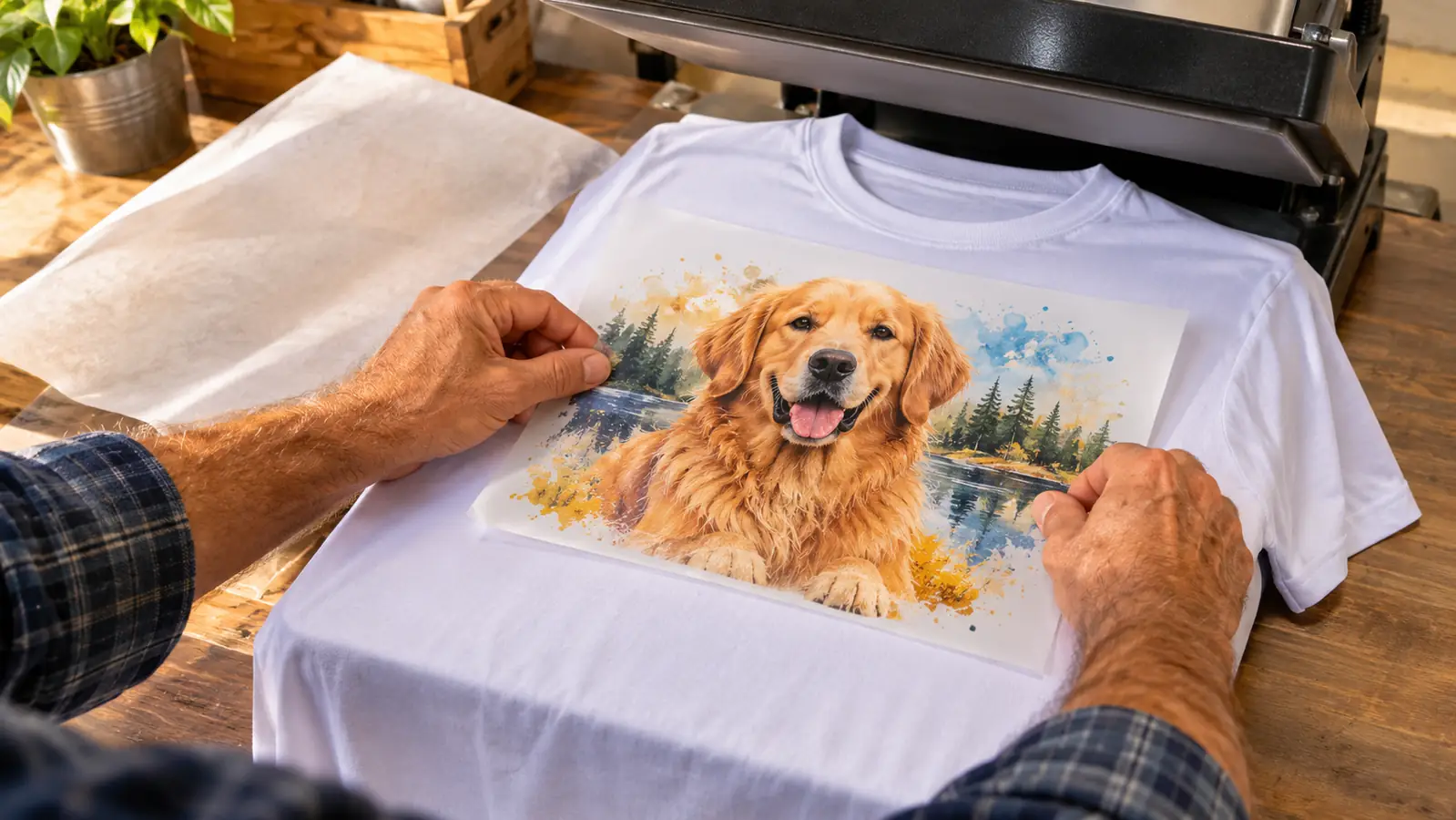
Most of what I sell is flat. A youth small shirt front, a tote panel, a set of photo coasters. The 8.5x11 sheet handles all of that with a trim. For mugs I cut the sheet down to the wrap and the leftovers go into a folder for small test prints. One size means one stack on the shelf and one less thing to get wrong at nine at night when I should already be upstairs.
The coated finish stops ink feathering at the edges
Feathering is what makes a printed design look like it was drawn with a wet marker. You notice it most on fine lines and small lettering, which is exactly what school logos and jersey numbers are made of. The coated surface on this stock holds the ink where the print head put it, so my trim line stays clean and the small details hold. Paper Finish is listed as coated, and that is the part doing the work.
125 g stock feeds through the printer without double-pulling
Thin paper grabs. It grabs two sheets when you wanted one, the second jams halfway, and you lose half an hour clearing it. This stock is listed at 125 g with a paper weight of 120, heavy enough to feed reliably through my inkjet but not so heavy that it fights the rollers. I have lost far fewer sheets to misfeeds than I did on the multipurpose paper I started with, and a wasted sheet at the wrong moment costs more than the paper does.
A high transfer rate shows up on the first shirt, not the fifth
Transfer rate is how much of the ink actually leaves the paper and lands in the polyester. A low rate means you press longer and hotter and still get a print that looks like it is sitting under a pane of glass. The listing calls this out as a high transfer rate, and in practice my press times came down after I switched. Shorter dwell also means less scorching risk on the light poly blends I press most often.

One pack covers polyester, ceramic, tile and metal blanks
I do not want a different paper for every blank in the shop. The listing covers white or light colored polyester, materials with cotton content up to 30 percent, ceramic, tile, phone cases and metal. That matches what actually sits on my shelves: team shirts, photo tiles, a run of coasters, and the occasional phone case for a neighbor's kid. Same paper, same settings, one learning curve instead of four.
It handles the cotton blend shirts that local teams actually order
Pure polyester is easy. The order that lands at a booster club is usually a 50/50 or a 65/35 because that is what the supplier stocks. The listing puts the ceiling at 30 percent cotton content, and I will be straight with you that going past it gives a faded, vintage result rather than a bright one. Stay under that line and the shirt comes out crisp. Knowing where the ceiling is happens to be half the battle.
Enough sheets to test a design before you commit the order
I test every new design twice. Once at full size on scrap to check the colors, once on an offcut of the actual blank. That is two sheets per design before a single shirt gets pressed. On a 110 sheet pack that testing budget is nothing. On a small pack it becomes a real percentage of everything you own, which is exactly when people start skipping the test and start ruining blanks on a Friday night.
It trims clean, so corners do not lift in the press
A ragged trim line is where lifting starts. The corner curls, the paper shifts a hair under the platen, and you get a ghost outline of your design a quarter inch off where you meant it. This stock cuts in a straight line with a trimmer or a pair of scissors and the cut edge stays flat against the shirt. Small thing. It has saved me a lot of blanks.
It takes the paper off the list of things that could go wrong
By the end of a long Saturday there are enough variables. Press temperature, dwell time, pressure, whether the shirt was prepped, whether the blank is what the label claims. The paper should not be on that list. A-SUB has been consistent pack to pack for me, and that is really the whole argument. A consistent paper lets you chase the real problem when a print goes wrong instead of second guessing your supplies.
That is the list, and none of it is dramatic. Paper is not the fun purchase in this craft, and nobody at a craft fair has ever asked me what brand of transfer sheet I used. But it is the cheapest variable to control, and controlling it makes everything downstream easier, from press settings to how the shirt looks after five washes. A-SUB has not given me a reason to switch in two years, which is about the highest thing I can say about a consumable.
Two test sheets per design is nothing on a 110 sheet pack. On a small pack it becomes a real slice of everything you own.
What I'd Skip
Two things to skip. First, do not buy this if you are running a regular inkjet with regular ink. Sublimation paper only works with sublimation ink, and the listing says so plainly, so an ordinary cartridge will waste a sheet and tell you nothing. Second, do not expect it to rescue a 100 percent cotton shirt. It will not. Cotton needs a different process entirely and no paper fixes that. It is also worth saying that 8.5x11 will not cover a full adult back print on a large shirt without piecing it. If oversized back prints are the whole of your business, buy wider stock. For the shirts, mugs, tiles and coasters that come through my press room, this is the right size and I have stopped shopping around.
Start with the pack that does not run out mid-order
110 sheets of 8.5x11 coated sublimation stock. Works with sublimation ink on polyester, ceramic, tile and metal blanks.
Amazon Check Today's Price on Amazon →