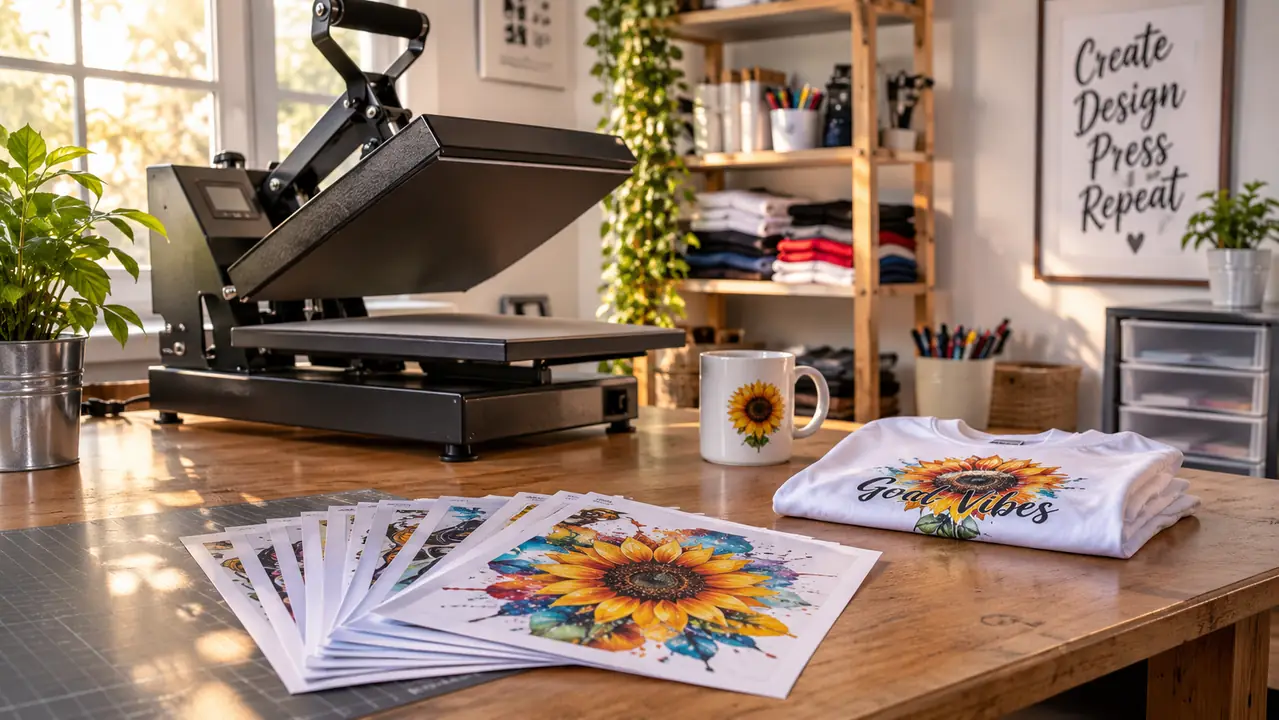
The first pack of A-SUB sublimation paper I ordered sat unopened in the press room for eleven days. Not because I did not need it. Because I had already ruined four shirts that month with a brand I will not name here, and I was tired of peeling transfers off polyester that came out faded at one end and scorched at the other. I did not want another variable to blame.
I run a small heat press and sublimation business out of my spare bedroom in Vancouver, Washington. Weekend craft fairs, custom orders for two local booster clubs, youth sports team shirts, and a small online shop. Four years in, I have learned that paper is the least glamorous thing in this craft and the thing that decides whether an order ships or goes in the scrap bin. A-SUB is what I have settled on. Not because it is perfect. Because after several hundred sheets I know exactly what it will and will not do, and that predictability is worth more to me than any single standout feature.
The Quick Verdict
A coated 8.5 x 11 sheet that releases clean on polyester and holds up on ceramic, tile and metal, with a curl problem near the bottom of the pack and a hard ceiling on cotton content.
Amazon Check Today's Price →The paper I reorder without reading the listing twice
110 sheets, 8.5 x 11, coated finish, built for white or light polyester, cotton blends up to 30 percent, ceramic, tile, phone cases and metal. It is the sheet that lives in my press room and the one I hand to friends who are just starting out. Check today's price and skim the recent reviews before you commit to a quantity.
Amazon Check Today's Price on Amazon →How I've Used It
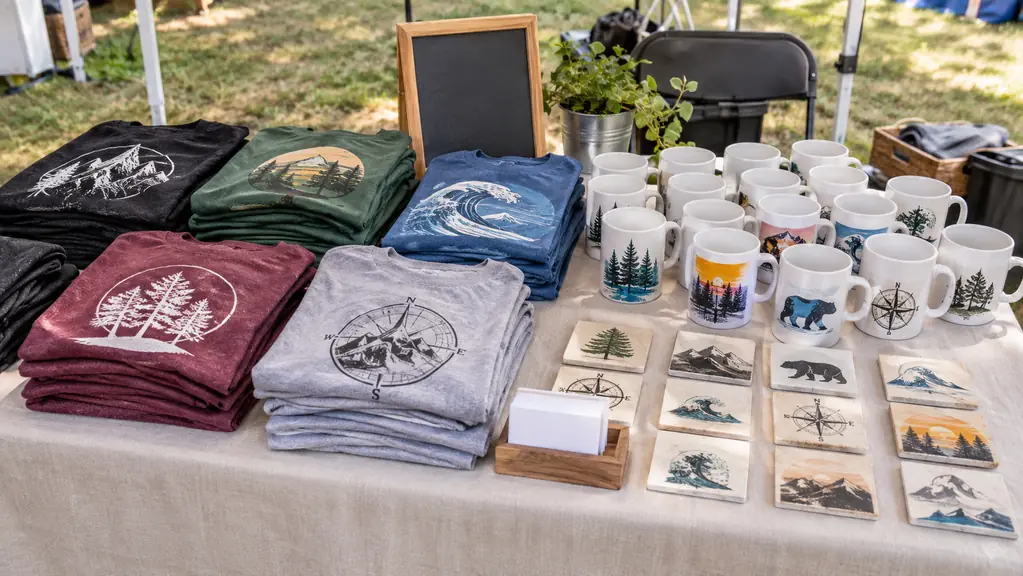
I press mostly polyester performance shirts for youth teams, which is the friendliest surface sublimation has. I also run ceramic mugs, 4-inch tile coasters, metal ornaments for a booster club fundraiser every November, and the occasional phone case for a neighbor's teenager. That spread covers everything the listing claims the paper handles, minus the cotton blends, which I will get to honestly in a minute.
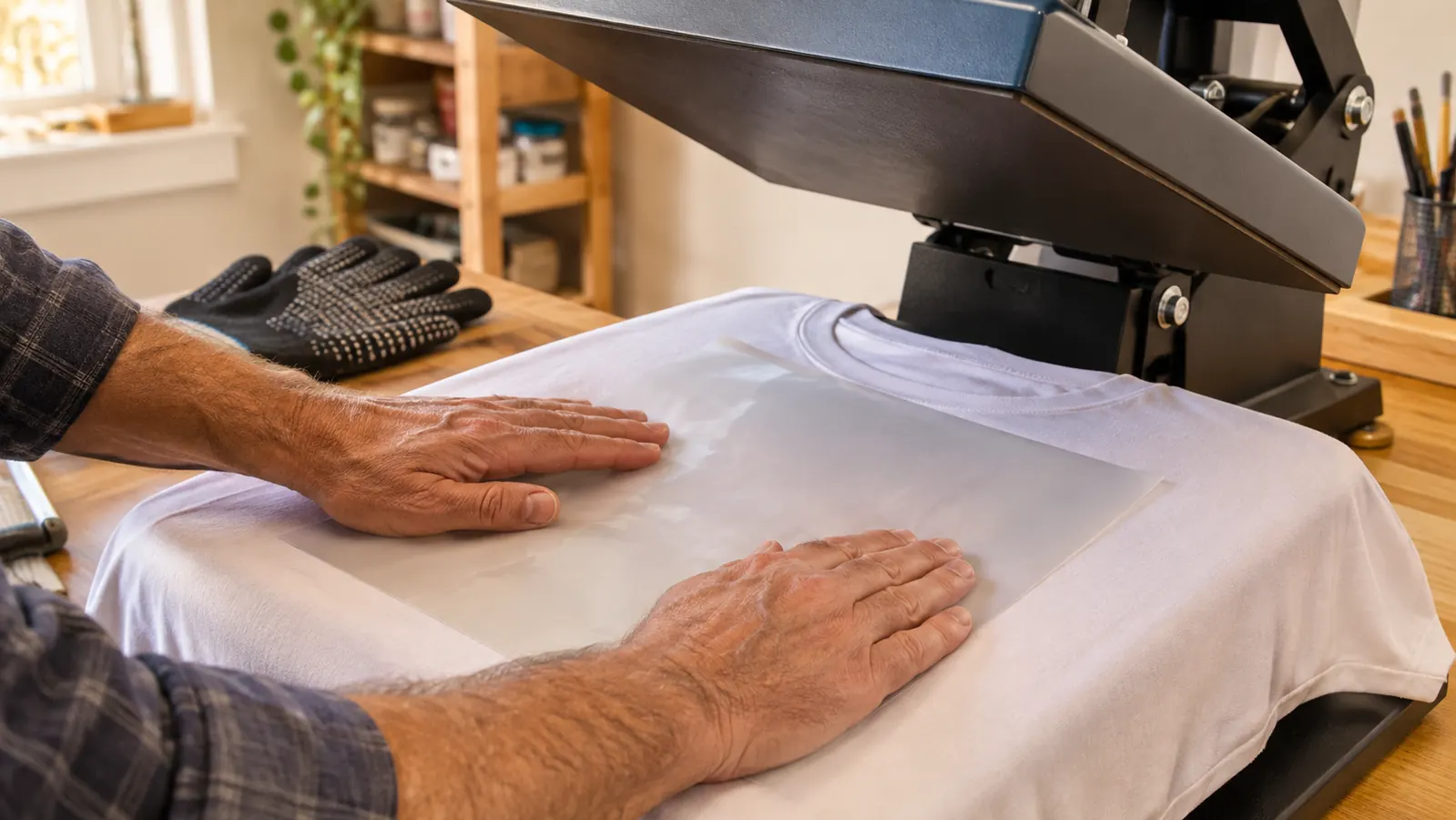
My press routine has not changed in two years. Four hundred degrees, sixty seconds, medium pressure, butcher paper over the top to protect the platen, and a cold peel once the shirt cools enough to handle. I load the sheet print-side down, tape two corners with heat tape, and check alignment against the collar before I close the press. The A-SUB sheet has never shifted on me during a press, which sounds like a small thing until you have pulled a shirt with a logo riding an inch and a half to the left.
I am on my sixth or seventh pack now. I stopped counting sheets somewhere around the three hundred mark, back when I was doing forty shirts for a single football fundraiser and losing track of everything. What I can tell you is that I have never opened a pack and found a damaged sheet, never found a sheet cut short of 8.5 x 11, and never had a run where the paper itself caused a reprint. The reprints I have done were my own fault, loaded crooked or pressed too hot.
What a 120 Paper Weight Feels Like in the Hand
The listing gives a 125 g item weight and a paper weight of 120, and the feel matches that. It is heavier than copy paper and lighter than cardstock, with a coated finish that is smooth without being slick. If you have ever handled a cheap transfer sheet that feels like tissue and folds over on itself the moment you pick it up, this is the opposite of that. The sheet holds its shape while you walk it from the printer to the press.
The coating is the part that matters for transfer. Brightness is listed at 80, so the printed side reads neutral rather than creamy, and the ink sits on the surface instead of soaking down into the fibers. That is why the release is so clean. When I peel a shirt, the paper comes away with that dry, almost dusty look on the back and the color stays where it belongs. On thinner sheets the ink sinks in and you get a faint, washed-out version of what you designed.
The weight also helps in the printer feed. Heavier sheets are less likely to grab two at a time or skew on the pickup roller. I run a converted EcoTank, and in two years of loading this paper I have had exactly one double feed, on a humid morning in February when I had left the pack open overnight.
Transfer Results: Polyester, Cotton Blends, and Hard Blanks
On white or light-colored polyester, this paper does what it says. Colors come out saturated, whites stay clean, and fine detail holds, which matters when a booster club hands you a logo with a thin serif line through the school name. I have pressed everything from a single-color team number to a full-color photo collage for a senior night shirt, and the collage came out with the skin tones intact instead of going orange the way they do when the press runs too hot or the paper releases badly.
The listing is clear that it is for polyester and for material with cotton content of 30 percent or less, and I want to be plain about that because it is where most disappointment starts. Sublimation does not bond to cotton the way it bonds to polyester. If you press this onto a 100 percent cotton shirt you will get a soft, faded print that washes out inside a month, and no amount of pressure or dwell time will fix it. A 50/50 blend sits in the gray zone. The 30 percent line in the listing is real and I would stay under it.
On hard blanks the paper performs better than I expected. Ceramic mugs with a mug press, tile coasters, metal ornaments, a couple of phone cases. Hard surfaces take the transfer fast and the release is almost forgiving, which is the opposite of my experience with cheaper sheets that left ghosting on mugs when the wrap was not perfectly tight. One warning the listing gives and I will repeat: this only works with sublimation ink. Regular printer ink will not transfer at all and you will think the paper is defective when it is the ink.
The Problems Nobody Mentions: Curl, Humidity, and the Last Ten Sheets
Here is the honest part. About two-thirds of the way into a pack, the sheets start to curl at the edges. Not dramatically, but enough that the printer sometimes grabs a corner and pulls it slightly off square. My fix is simple and costs nothing: I pull the bottom twenty sheets out, lay a heavy book on them overnight, and rotate them to the top of the stack. It works every time. It is still an annoyance you should know about before you open the pack, especially if you are running a batch of thirty shirts and do not want to stop.
Humidity is the other one. I live in the Pacific Northwest, where the air in my press room is damp from October through April, and this paper is sensitive to it. Leave a pack open on the table overnight and the sheets will take on a slight wave that shows up as a faint mottling in large areas of solid color. I keep the current pack in a gallon zip bag with the air pressed out, and I have not had the problem since. That is a storage habit, not a flaw in the paper, but nobody tells you about it when you are starting.
Three hundred sheets in, the only reprints I have done were my own fault: loaded crooked, pressed too hot, or left the pack open on a damp night.
110 Sheets per Pack: What That Actually Means for Orders
A pack holds 110 sheets at 8.5 x 11, which on a standard shirt press gives you one full front or back per sheet. For the small orders I take, that is roughly four to six weeks of steady work if I am pressing a few evenings a week, or about two football fundraisers if I am not. It is enough that I am not reordering every other week, and small enough that a pack does not sit around long enough to go wavy.
The size is also the reason I stopped buying larger sheets. I tried 11 x 17 early on, thinking I would save waste on big back prints, and I ended up trimming more than I saved. With 8.5 x 11 I lay out a left-chest logo and a sleeve number on one sheet for the small stuff, and use a full sheet for the back print. It is a boring detail that ends up mattering more to my material cost than anything else in the press room.
How It Compares to the Paper I Used Before
My first two years were spent jumping between whatever was cheapest that month. The pattern was consistent: the cheap sheets transferred fine on a fresh pack and got worse as they aged, and the release left a faint haze on dark polyester that I could only see under the shop light. I also fought the printer constantly, jams and skews, and I blamed the printer for a year before I figured out it was the paper.
A-SUB is not the cheapest sheet per page and I am not going to pretend it is. What it bought me was fewer reprints and fewer ruined blanks, and every ruined polyester shirt costs more than the difference between a good sheet and a cheap one. My reprint rate on team orders dropped from maybe one in ten to close to nothing once I stopped switching brands. That is the whole case for it, and it is a practical case, not an exciting one.
What I Liked
- Clean release on polyester with almost no ghosting, even on large solid-color areas
- Heavier coated sheet that feeds through the printer without skewing or double-feeding
- Holds fine detail well, including thin logo lines and photo work
- Performs on hard blanks: ceramic, tile, metal and phone cases
- Dimensions and sheet count match the listing, no short sheets in six packs so far
- Keeps its shape between printer and press, so alignment stays where you set it
Where It Falls Short
- Sheets curl at the edges toward the bottom third of the pack
- Sensitive to humidity, so an open pack on a damp night shows up in the print
- Hard stop at 30 percent cotton content, with no margin for error
- Needs sublimation ink only, so a converted printer is a prerequisite
- Not the cheapest option per sheet, which matters if you are still testing designs
Who This Is For
This is for someone who has a converted sublimation printer and a heat press and is past the stage of pressing one test shirt a month. If you are taking team orders, doing a craft fair table, or filling a handful of custom mug orders a week, the consistency is what you are paying for. It suits polyester apparel, ceramic and metal blanks, and anyone who wants to stop guessing whether a reprint was the paper's fault or their own.
It also suits the person who wants one paper to learn on. Because the sheet behaves the same from pack to pack, when something goes wrong you can reasonably assume it was your temperature, your pressure, or your timing. Learning on a paper that changes batch to batch is how people conclude that sublimation does not work, when what actually happened is that they never had a stable variable.
Who Should Skip It
Skip it if your work is mostly cotton. If your customers want heavyweight 100 percent cotton tees, this paper will disappoint you and it is not the paper's fault. You want a different process entirely, or a polyester shirt with a cotton feel. Also skip it if you are still in the design-testing phase and burning through sheets on purpose, because there are cheaper sheets for practice and you will not notice the difference.
And skip it if you are not willing to store it properly. I keep mine in a zip bag in a closed drawer, and I flatten the last twenty sheets overnight before I use them. If that sounds like more fuss than you want, a cheaper sheet that you do not mind losing to humidity may honestly serve you better.
The sheet that stopped me blaming my printer
110 coated 8.5 x 11 sheets, built for polyester, cotton blends up to 30 percent, ceramic, tile, phone cases and metal, and made to work with sublimation ink only. If your reprint pile is taller than your shipping pile, this is worth a try. Check current pricing and availability on Amazon.
Amazon Check Today's Price on Amazon →