Two stacks of sublimation paper live on the shelf above my heat press. One is A-SUB. The other is Hiipoo. I never set out to compare them. I bought whichever pack was in stock the week I ran low, and somewhere in the middle of a youth soccer shirt order I realized my hand had been reaching past one stack to get to the other for months. That is usually how a real comparison starts, not with a spreadsheet but with a hand that keeps going to the same place. I have run both papers through the same press, in the same spare bedroom in Vancouver, Washington, on the same blanks. Here is what I found, and who each pack actually suits.
The short answer, if you are standing in a shop aisle and want it fast: A-SUB Sublimation Paper in 8.5 x 11, 110 sheets, is the pack I reorder. The listing gives it a paper weight of 120, a coated finish and a high transfer rate, and it is built for white or light colored polyester, cotton content of 30% or less, ceramic, tile, phone cases and metal. It only works with sublimation ink, which is true of every sheet in this category and worth saying out loud, because people do try it with a regular printer cartridge and then blame the paper. Hiipoo is a good paper too. It just fits a different buyer, mostly the one who wants to buy small and test a blank before committing to a big pack.
| A-SUB Sublimation Paper | Hiipoo Sublimation Paper | |
|---|---|---|
| Sheet size | 8.5 x 11 in, standard letter | 8.5 x 11 in, standard letter |
| Sheets per pack | 110 | Sold in a wider range of pack sizes, including small ones |
| Paper weight | 120, with a 125 g item weight on the listing | Similar weight class, lighter than cardstock |
| Finish | Coated, high transfer rate per the listing | Coated |
| Blanks it suits | White or light polyester, cotton 30% or less, ceramic, tile, phone cases, metal | The same family of blanks |
| Curl out of the pack | Sits flat after a night under a book | Curled more in my damp press room in winter |
| Release after pressing | Lifts clean at the corner once the shirt cools | Sometimes needed a second press at the corner |
| Reordering on short notice | One pack size, so I keep two packs on the shelf | Easier to find locally and in more pack sizes |
| Best for | Shirt runs and mug wraps you have already proven out | Testing a new blank without committing to a big pack |
How I Compared Them
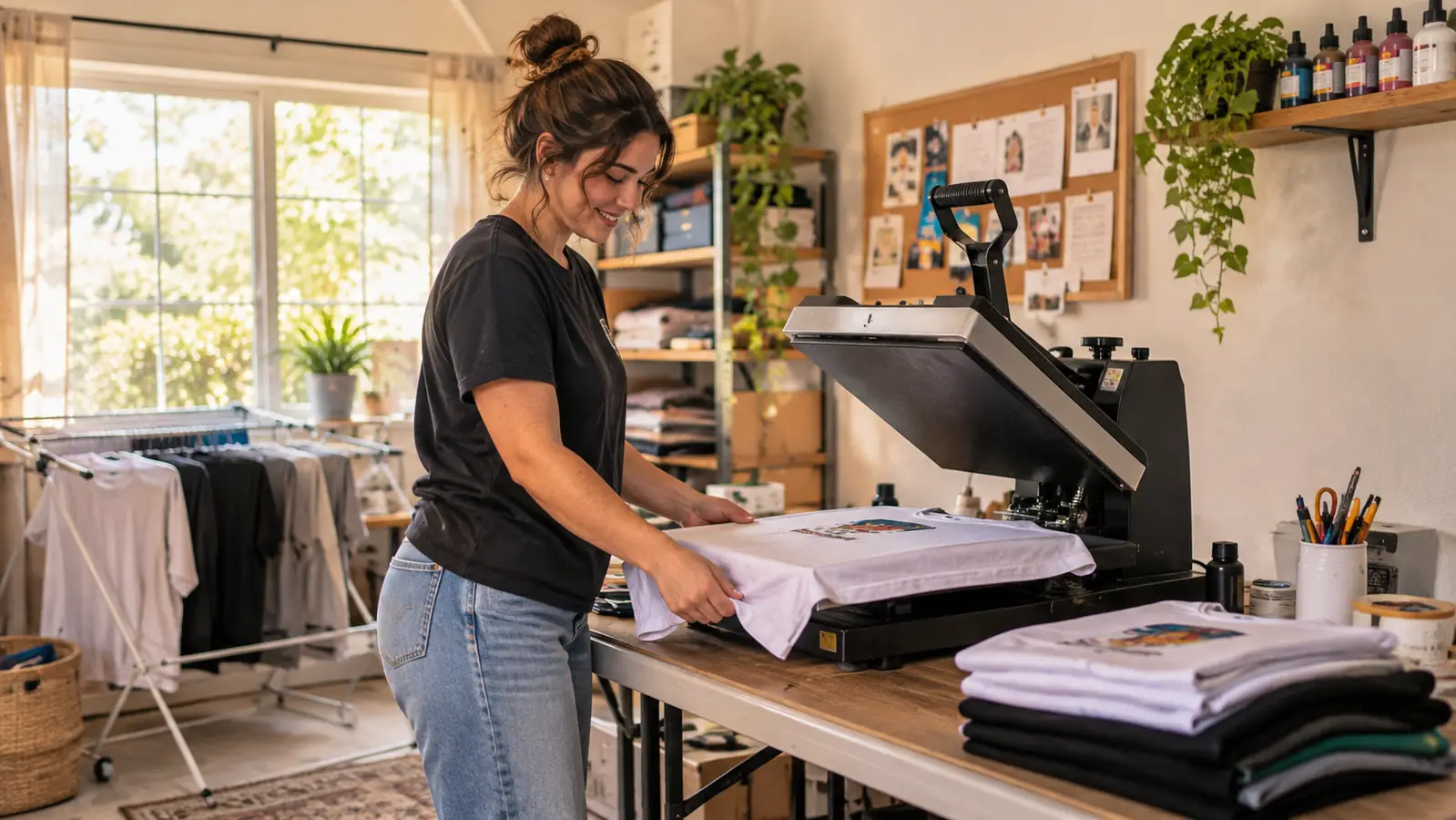
I did not run a lab. I ran orders. Over about fourteen months I pressed school spirit shirts for a booster club, a run of youth soccer jerseys with names on the back, mug wraps for a holiday market, and a pile of ceramic tiles I use as test pieces before I touch anything a customer is paying for. Both papers went through the same press at the same settings, on the same blanks, in the same room. The only thing that changed was which sheet I picked up.
The press room is a converted spare bedroom and it gets humid in winter, which matters more than I expected. Paper that curls fights the printer feed, and a crooked sheet means a wasted print and a reprint. Most of what I noticed about these two papers came down to small physical behavior like that, not to how vivid the print looked. Both printed vivid. Both were fine on a white polyester shirt. The difference showed up in the boring parts: how the sheet lay in the tray, how it let go of the shirt, how many times I had to press a corner twice.
My first fix for the humidity was a plastic storage bin with a lid, on the theory that keeping the paper sealed would keep it flat. It helped a little and made the bin a nuisance, because I was opening and closing it forty times an evening with inky fingers. What actually worked was simpler. I pull the sheets I need the night before and lay them flat under a heavy book, and I write the date on the pack when I open it so I know how long it has been sitting. A pack of A-SUB opened in October still fed flat in February, which is more than I can say for the lighter sheet I tried before it.
What the Numbers on the Pack Mean
A paper weight of 120 on a sublimation sheet is the middle of the road, and the middle of the road is where you want to be. Too light and the sheet goes limp in the printer when it takes a heavy ink load, which is where feed jams and ink pooling come from. Too heavy and it takes longer to release, and on a curved blank like a mug the paper fights the wrap. The listing also gives an item weight of 125 g for the pack, which tells you the sheets are not tissue thin. For the shirts, tiles and mugs I press, 120 has been the weight that gives me the fewest do overs.
I learned that the hard way. Before A-SUB I was buying a thinner sheet, and I ran a 12 x 12 print of a team logo that was mostly solid color. Halfway through the print the sheet buckled, and the design came out with a ripple down one side. I pressed it anyway because it was only a practice shirt, and the ripple showed up in the finished print as a pale band about an inch wide. That was the week I stopped choosing paper on anything other than weight and behavior.
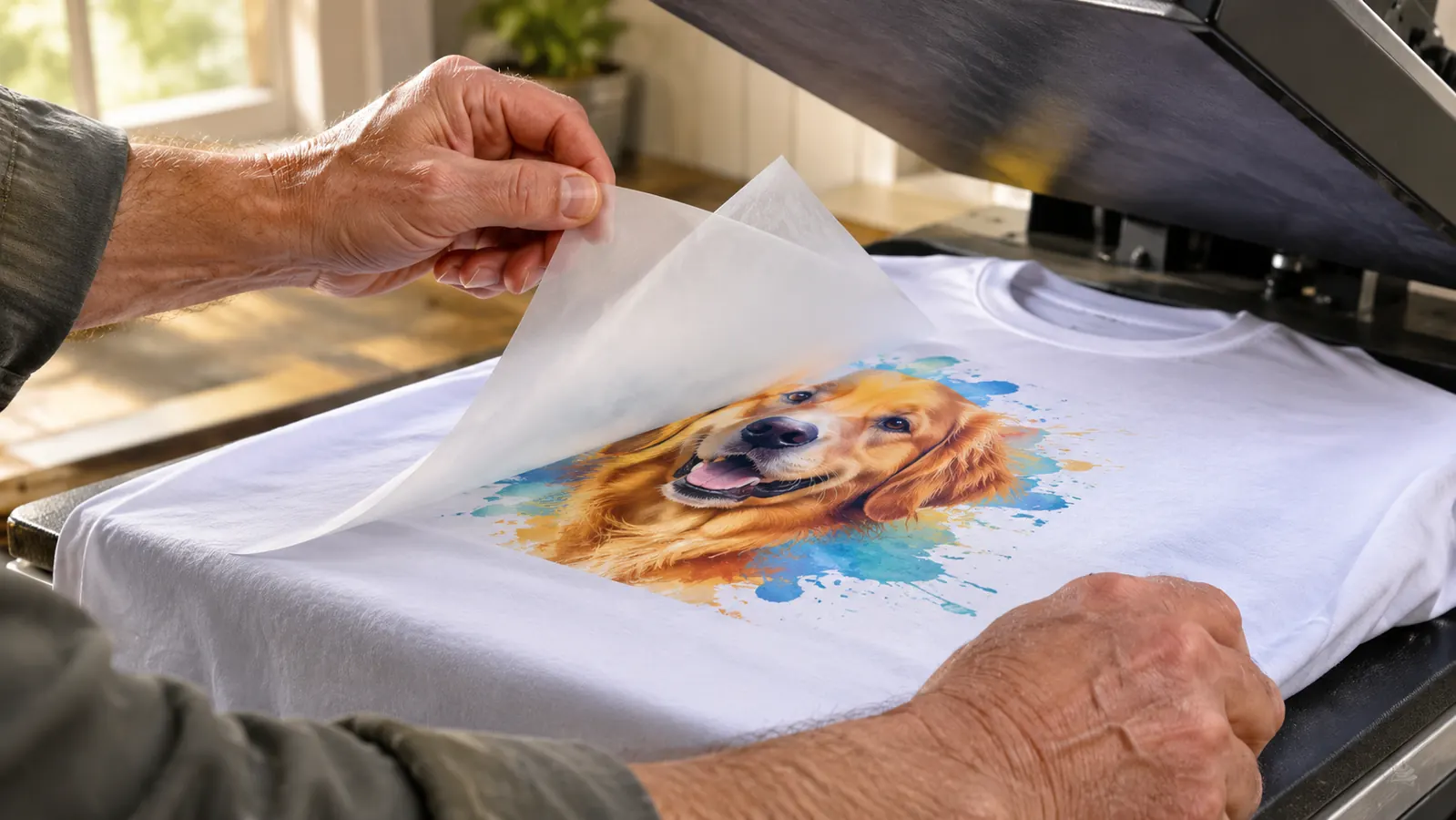
Coated means the sheet carries a receiving layer that holds the sublimation ink at the surface instead of letting it soak in, which is what allows a transfer to happen at all under heat. High transfer rate is the listing's way of saying less ink stays behind on the paper. You can check this yourself. After a press, look at the sheet you peeled off. A good transfer leaves a pale ghost of the design. A poor one leaves most of the color still on the paper, and that color is now wasted. The A-SUB sheets come off pale, which is exactly what I want to see.
Where A-SUB Wins
The first place A-SUB wins is consistency from sheet to sheet. A 110 sheet pack is a long run, and I have been through several of them. I have not had a sheet in that pack feed crooked because it had curled in storage, which I cannot say for every brand I have tried. The listing describes the finish as coated and the transfer rate as high, and the practical version of that is a sheet that sits flat, takes ink evenly and lets go of the shirt cleanly at the corner once it cools. That sounds small until you are on your eleventh mug of the evening and a corner tears.
The mug test is the one I trust most, because a mug wrap bends the paper in two directions at once and there is nowhere for a bad sheet to hide. Last November I wrapped 60 mugs over four evenings for a holiday market, using the same A-SUB pack the whole way through. Two of those mugs gave me trouble and both times it was my tape slipping on the curve, not the paper. I keep a note on the pad by the press when something goes wrong, and after that run the note said tape twice, paper zero.
The second win is the weight and the way it handles a full bleed print. At a paper weight of 120 on an 8.5 x 11 sheet, it holds a large solid area of ink without the paper going soft in the printer or buckling under the press. I press a lot of shirts where the design covers most of the front panel, and a lighter sheet will sometimes ripple in a way that shows up as a faint line in the finished print. I have not had that happen with A-SUB. The trade is that a heavier sheet takes slightly longer to cool before you peel. If you are impatient, you will peel early and then blame the paper. Wait for it.
Where Hiipoo Wins
Hiipoo wins on pack sizes. If you want to test a new blank without buying a hundred sheets of paper you might not like, Hiipoo is easier to buy in a small quantity, and for someone just starting that is a real advantage. I bought my first Hiipoo pack small for exactly that reason, before a school order, to make sure a batch of performance fabric shirts would take a transfer at all. Testing small is smart. A pack of paper is a much smaller mistake than a box of blanks.
Hiipoo also wins on showing up. It is in more of the shops and listings I buy from, and when I have run out mid order on a Saturday, it has been the one I could actually get my hands on. The Saturday I am thinking of was in March, the week a booster club moved a pickup date up by two days. I had 24 shirts to press and about 15 sheets left on the shelf. I drove to two shops before I found a pack, and it was Hiipoo. Those 24 shirts went out on time and I heard nothing but good things back. That is not a knock on A-SUB. It is just the truth about buying one pack size.
One more point in its favor: Hiipoo has been forgiving on nights when my printer was running low and the last shirt of the evening came off a shade light. I would not plan around that, and I would not rely on it for an order going to a customer. But on a night when you cannot stop and refill, forgiving is worth something, and I noticed it because I was looking.
Eleven mug wraps in one evening, one ghosted handle, and not a single sheet fed through crooked. That is the whole case for A-SUB, and it took me a year to notice it was the case.
The Thing Neither Paper Fixes
Neither sheet will save you from the two mistakes that ruin most beginner sublimation projects. The first is pressing a dark or high cotton shirt. Both papers are built for white or light colored polyester with a cotton content of 30% or less. A dark, high cotton tee will take a faint washed out print and then fade in three washes, and no paper on the market changes that. If you want a dark shirt, you need a different process, not a different sheet. I learned this on a stack of dark practice shirts I bought on sale and then could not use.
The second is ghosting. If you lift the press and the shirt shifts even a little before you peel, you get a double edge on the design. I lost four shirts to this in my first year, and the fix was a couple of pieces of heat resistant tape and a habit of peeling in one motion from a corner. Paper quality cannot help you here. Practice can. Both A-SUB and Hiipoo will give you a clean print the moment you stop moving the shirt.
What I Liked
- Feeds flat from the pack, even after weeks on the shelf
- Holds a large solid print area without rippling
- Releases cleanly at the corner once the shirt cools
- 110 sheets goes a long way on a run of team shirts
Where It Falls Short
- One pack size, so there is no small pack for testing
- The 120 weight needs a longer cool before you peel
- Sublimation ink only, same as every sheet in this category
The pack I keep on the shelf above the press
110 sheets, 8.5 x 11, paper weight 120, coated finish. Built for white or light polyester, cotton of 30% or less, ceramic, tile, phone cases and metal. If your blanks are already picked out, this is the paper to put under them.
Amazon Check Today's Price on Amazon →Who Should Buy Which
Buy A-SUB if you already know what you are pressing. If you have a drawer of blanks you have tested, if you have a booster club or a team order coming and you need a pack that gets you through it without a bad sheet, and if you would rather buy once and stop thinking about paper, the 110 sheet pack is the sensible buy. The 8.5 x 11 size covers a standard front print and trims down for mugs and small tiles, and the coated sheet behaves the same on the hundredth print as it did on the first.
Buy Hiipoo if you are still testing. If you have not settled on a blank, or you are not sure your printer and your ink are dialed in, buy small, run a few test pieces and see how the whole process feels before you give up shelf space. There is nothing wrong with Hiipoo paper. It is a good place to start, and starting small is how I learned most of what I know. The only thing I would tell you is that once you find the blank you like, buy the bigger pack of whichever paper you trust and stop shopping for paper. The paper was never the interesting part of this craft. The shirt is.
One less thing to reprint this weekend
A-SUB Sublimation Paper, 8.5 x 11, 110 sheets. Coated, paper weight 120, high transfer rate, and made for the blanks most of us actually press.
Amazon Check Today's Price on Amazon →