
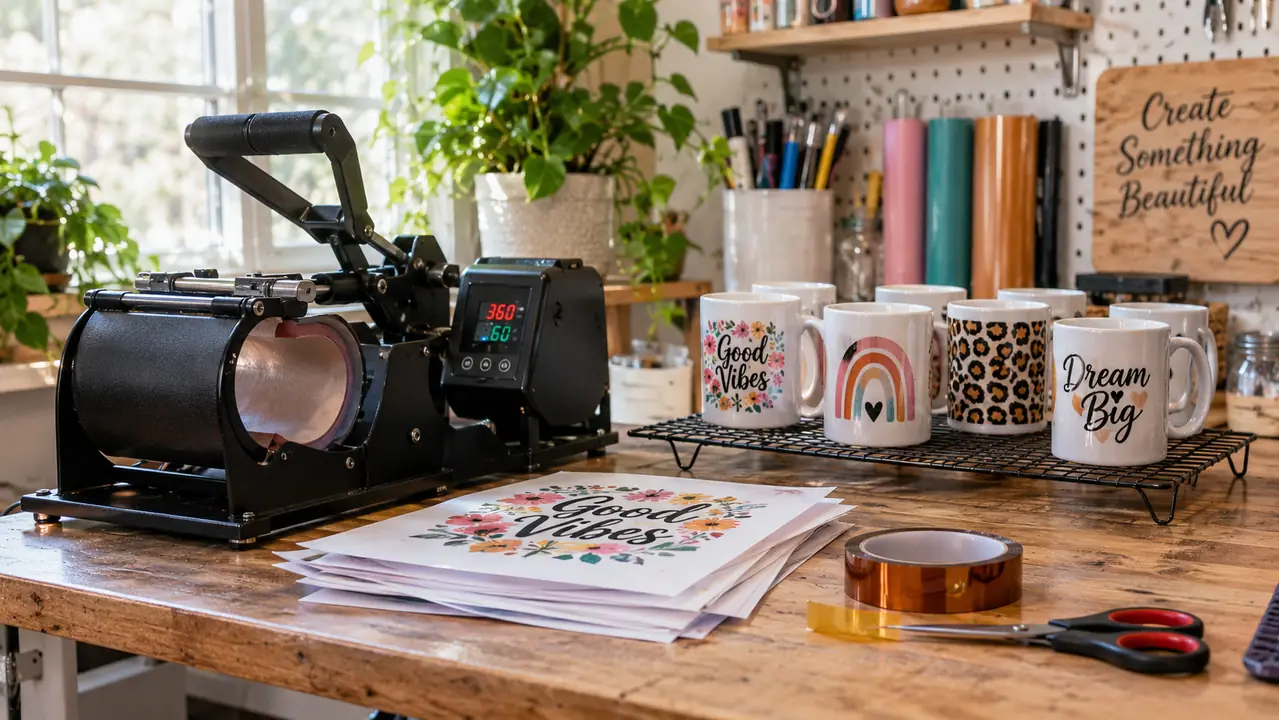
The box came back to me on a Tuesday. Thirty-six mugs for a youth soccer booster club, and about a third of them had logos that looked like they had spent the summer on a dashboard. Washed out. Fuzzy at the edges. One mug was so faint you could barely tell there was a design on it at all. I sat on the floor of the press room and unwrapped every single one, and the feeling in my stomach got worse with each sheet of bubble wrap.
I did what most people do first. I blamed the press. Then I blamed the mugs, then the ink, then the humidity in the spare bedroom, then myself. It took three more ruined batches before I finally looked at the thing I had paid the least attention to. The paper.
I had been buying whatever sublimation paper was cheapest that week, usually whatever came up first with free shipping. Now I use A-SUB Sublimation Paper, 8.5 by 11 inches, 110 sheets to a pack, and the ghosting stopped inside one order. Same press. Same mugs. Same ink. Different paper.
Here is the part nobody explained to me when I started. Sublimation paper is not just a carrier for the ink. It has a coated surface that holds the ink in a suspended layer until the heat pulls it across onto the blank. Cheap paper holds less ink and lets go of it unevenly. The A-SUB listing says it plainly: coated finish, high transfer rate. Coated is the word that matters. It is also the word the bargain packs tend to leave out.
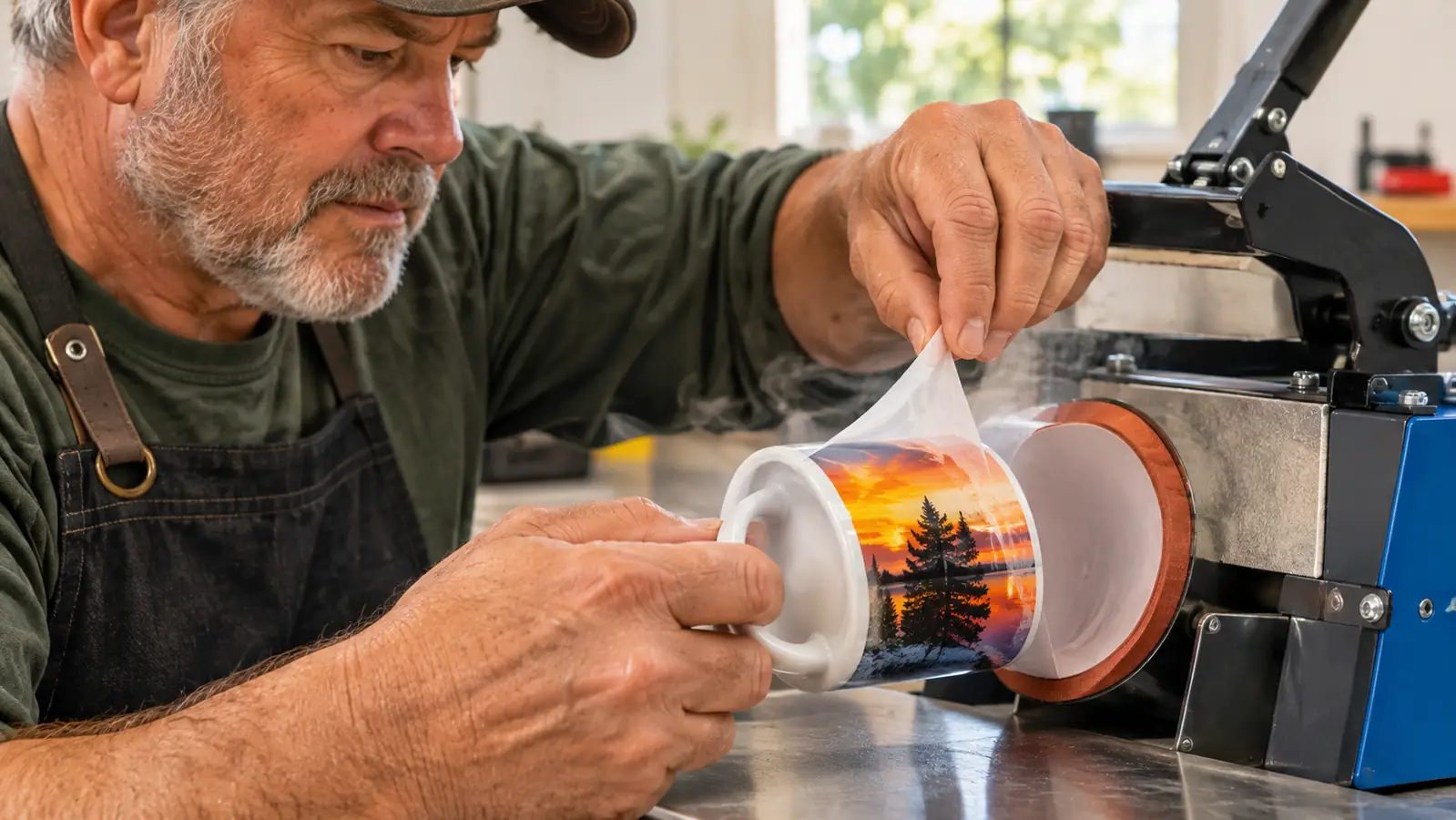
These days the process looks like this. I print the sheet, let it rest for a minute or two so the ink settles, then tape it tight to the mug with heat tape. The 8.5 by 11 size trims down neatly for a standard mug wrap with very little waste, which matters more than people think when you are buying paper by the hundred. I press at the time and temperature my mugs call for, and I peel hot.
The difference showed up in the first batch I sent back out. The booster club treasurer opened the box in front of me at a Saturday tournament, held a mug up to the light, and said it looked like it came from a store. That sentence did more for my little business than any ad I could have written.
Same press. Same mugs. Same ink. The only thing that changed was the paper, and that was the whole problem.
If your prints look gray before they have even been washed, change this first
A-SUB Sublimation Paper, 8.5 by 11 inches, 110 sheets to a pack. Coated finish for a high transfer rate, built for sublimation ink only. It is the first thing I would change in anyone's press room, and the least dramatic.
Amazon Check Today's Price on Amazon →Once the paper was sorted, the other mistakes got easier to see. I stopped trying to press onto dark polyester and 100 percent cotton shirts, because sublimation does not work on them. The listing for A-SUB is honest about its range: light colored polyester, cotton blends with 30 percent or less cotton, ceramic, tile, phone cases, metal. If a customer brings me a dark cotton tee, I quote them vinyl instead. That one rule has saved me more ruined blanks than anything else I have changed.
Paper also will not rescue a bad press setting, and I want to be clear about that. I still check my time and temperature for every new blank I bring in. I still tape edges down flat, because a curled corner prints a pale halo on the mug and no paper on earth fixes that. What good paper does is remove one variable from the pile, and when you are pressing thirty mugs in an evening, one fewer variable matters.

The other thing I noticed is how the sheets handle. They are 125 g stock, they feed through my inkjet without jamming, and they do not buckle when the ink hits them the way some of the thin packs did. I keep the pack in a plastic tub with a lid, because humidity in the Pacific Northwest is real and damp paper is a headache I have already paid for once.
What I will not tell you is that this fixed everything. It did not. I had a run of phone cases come out soft last spring because I rushed the cool-down. I still get the occasional sheet that curls at the corner if I leave the pack open overnight. Sublimation rewards patience and punishes hurry, and no brand of paper changes that.
Most of my orders now come from people who got something at a craft fair and came back for more. The booster club that ordered thirty-six mugs in March came back in October for another sixty, plus matching tumblers. When repeat orders show up, you learn pretty fast which materials you can trust and which ones you were fooling yourself about.
What I'd Tell You If We Were Sitting at My Kitchen Table
If you were across from me with a mug in your hand and that same sick feeling I had on that Tuesday, here is what I would say. Change one thing at a time. Do not buy a new press. Do not switch inks. Do not rebrand your whole shop. Print the same design on the same blank twice, once with the paper you have and once with A-SUB, and press them side by side. Then hold them up together in daylight. You will know in about ten minutes, and you will stop guessing.
And buy the 110 sheet pack, not the small pack, unless you are only ever making gifts for your own family. Once you find a paper that behaves, you will go through it faster than you expect. I keep two packs in the press room now, and I have stopped thinking about paper entirely, which is exactly where I want my attention. It belongs on the design, on the press time, and on whether the customer will smile when they open the box.
One more thing. Say no to the order you cannot do well. I turned down a rush job for forty dark cotton shirts because I knew what the answer was, and that customer came back six months later for polyester hoodies instead. Slow and honest has kept me busier than fast and cheap ever did.
One pack, one variable removed, and the guessing stops
110 sheets of A-SUB Sublimation Paper, 8.5 by 11 inches, coated for a high transfer rate and made to work with sublimation ink. The same pack I keep two of in the press room.
Amazon Check Today's Price on Amazon →