
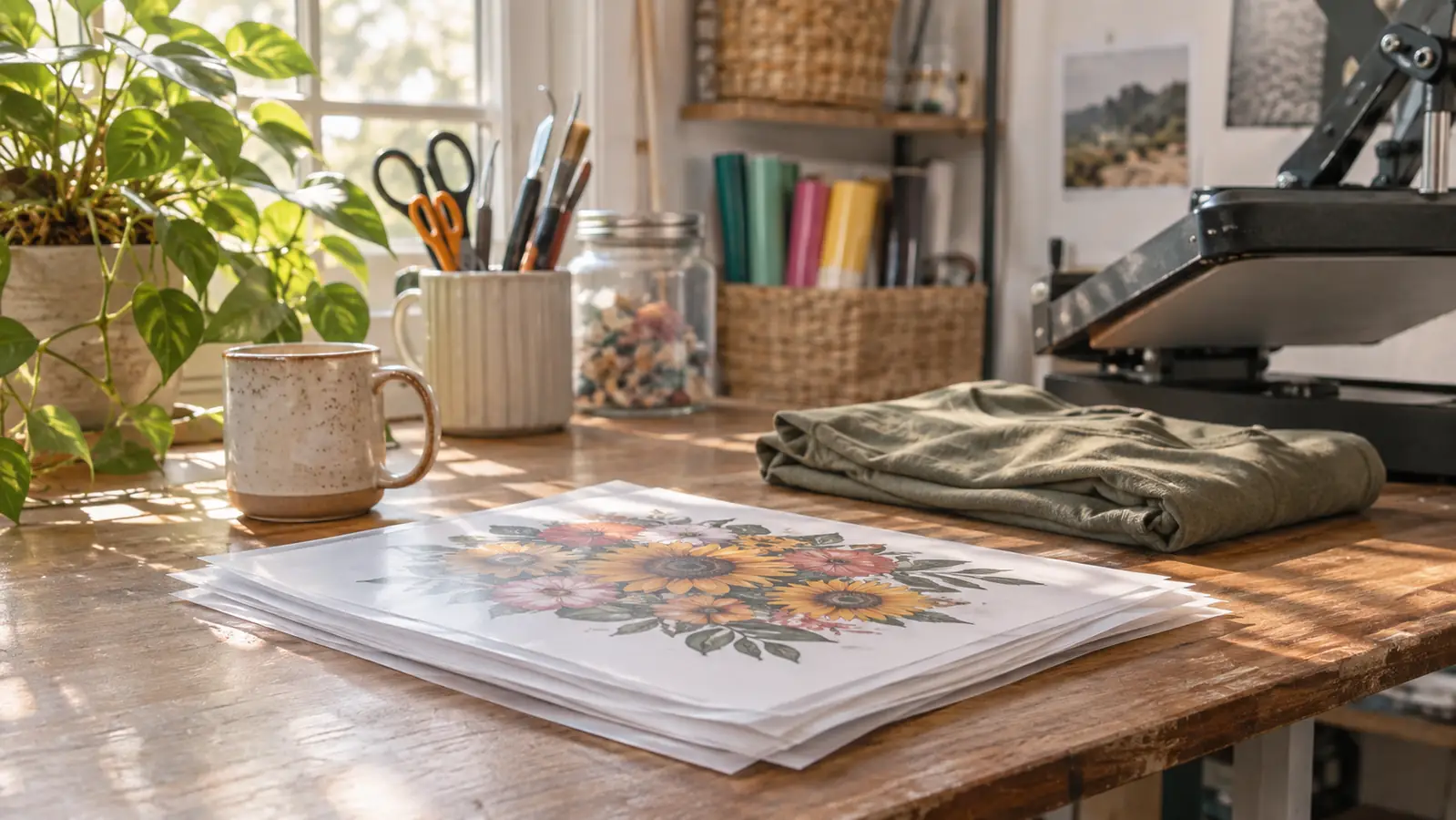
Three shirts into my first pack of A-SUB Sublimation Paper, I had a bin full of rejects and a heat press that kept beeping at me. That pack is 110 sheets of 8.5 by 11 inch paper with a 4.8 star average across more than 54,000 ratings, which is exactly why I bought it, and exactly why I assumed every failure was my own fault. Some of them were. Not all of them.
This is the honest version of the review. Not a list of reasons to click buy, not a page that pretends every sheet came out perfect. It is what this paper does well, where it quietly stops working, and the handful of changes I made in the press room before it started behaving.
My name is Corinne Hadley. I run a small heat press and sublimation business out of a converted spare bedroom in Vancouver, Washington. Weekend craft fairs, custom orders for school booster clubs and youth sports teams, a modest online shop on the side. Four years in, A-SUB is still the paper sitting on my shelf. That is not the same thing as saying I would hand it to a beginner without a warning.
If you are three ruined blanks deep and wondering whether you bought badly, read the printer settings section further down before you order anything else. There is a fair chance the paper is fine and the settings are not.
The Quick Verdict
A steady everyday sheet for white and light polyester, blends under 30 percent cotton, ceramic, tile, phone cases and coated metal. Feed it properly, do not flood it with ink, and it delivers sharp, even transfers sheet after sheet.
Amazon Check Today's Price →The Sheet I Keep Reordering, 110 at a Time
If your work is polyester shirts, blends, mugs and tiles, you can stop shopping around. This is the pack that lives in my press room, and the current price is worth a look before your next supply order.
Amazon Check Today's Price on Amazon →How I've Used It
Everything I make goes through one heat press in that spare room. Polyester tees for the booster clubs are the bulk of it, then mugs, tiles, coated metal tumblers and the occasional phone case for the fair table. Shirts pay the bills. Mugs sell to people who already own enough shirts.
The sheet is 8.5 by 11 inches, 110 to a pack, listed at 125 g with a coated finish and a high transfer rate. That coated part matters more than the number. A coated sheet takes the ink on the surface instead of letting it soak down into the fiber, so when the press pulls the transfer, more of the image leaves the paper and lands on the blank.
I print on an inkjet loaded with sublimation ink, one sheet at a time, and I let each print rest before it goes anywhere near the press. The rest is not optional. A wet sheet is where most of my bad transfers come from, and it took an embarrassing number of ruined blanks before I believed that.
The listing is blunt about ink and it is right: this only works with sublimation ink. Regular ink does not transfer at all. It just sits on the sheet looking like a print and then does nothing under heat. I have watched someone burn through half a pack learning that, and I have been that someone for other reasons often enough to keep my mouth shut about it.
Printer Settings That Finally Worked
This is the part I wish someone had written on a card and taped inside my cabinet. Every printer menu is worded differently, so treat these as a starting direction rather than gospel, but the direction has been the same on both printers I have owned.
I print on the plain paper setting, standard quality, with the image mirrored. I turn off anything labeled economy or ink saver, because a thin print transfers thin and I end up chasing color for an hour on a test shirt. Then I print one sheet and look at it before I commit a whole batch.
The other setting people miss is paper type. If my printer thinks it is feeding photo paper, it lays down more ink than this sheet wants on a busy design, and the halo comes back. Plain paper, standard quality, mirrored, no economy mode. That combination has been my default for three years and I do not fiddle with it anymore.
Then the rest is patience. I stack finished prints face up under a book for ten minutes while I set up blanks. When a print feels cool and dry to the touch, it is ready. When it feels tacky, it is not, and the press will tell you so, usually on the blank you cared about most.
One more habit. I run a nozzle check before any order over ten pieces. Not after. A single clogged channel shows up as a faint band running across every shirt in a batch, and you will never see it on the screen. You see it on fabric, in the middle of a stack.
The 125 g Weight, and What It Actually Changes
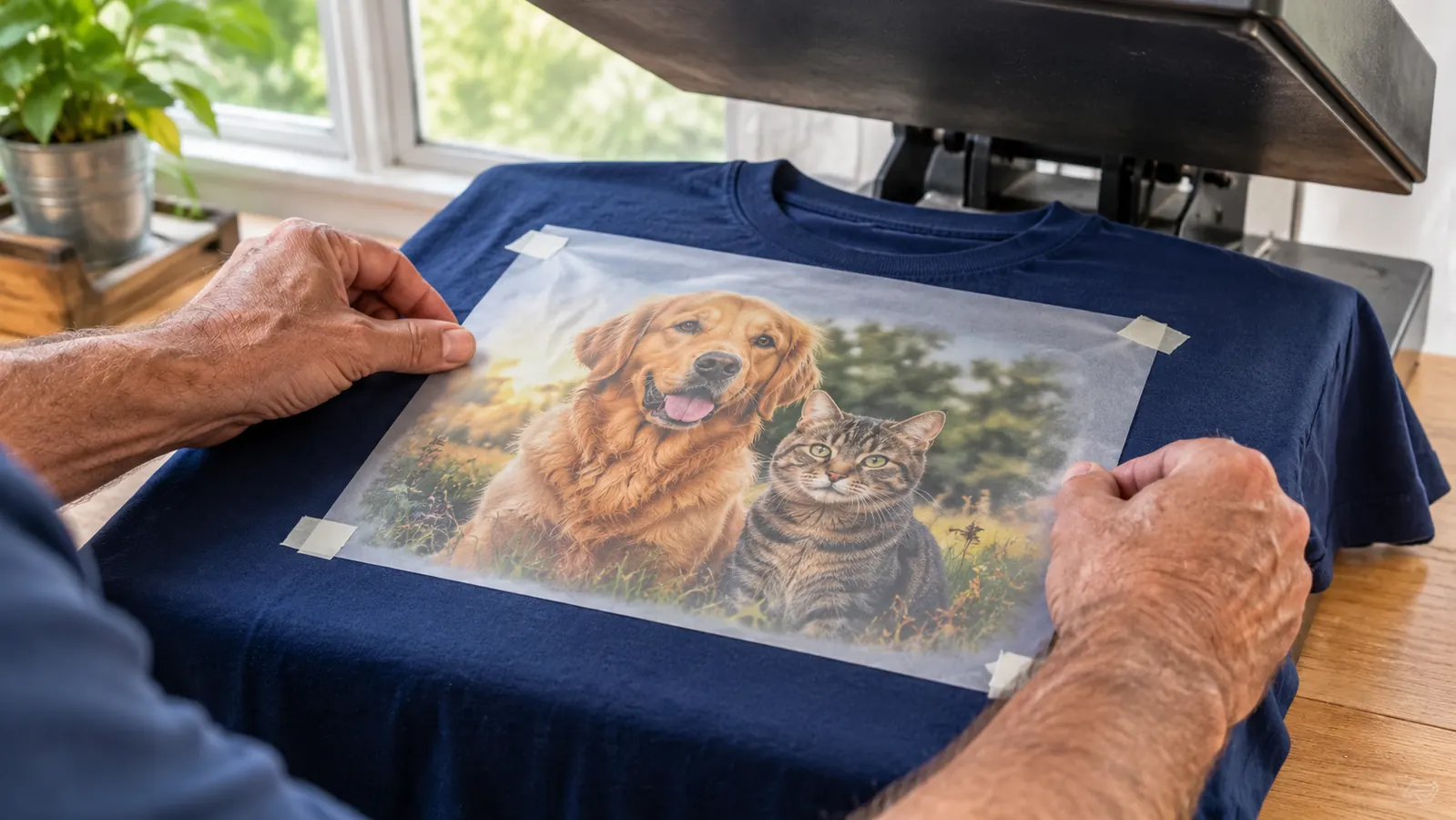
Thin paper curls. It curls coming out of the printer, it curls sitting on the table, and it curls at the exact moment you are trying to tape it flat against a shirt with the press already up to temperature. The 125 g sheet has enough body to stay flat on its own most of the time, and when I do need tape, two small pieces at the corners hold it.
The heavier sheet also carries a full ink load better. A busy design with large areas of solid color needs a lot of ink. A light sheet gives that ink somewhere to buckle. This one holds the image without cockling at the edges, so the transfer lands even instead of fading out near the border.
What it does not do is fix a bad print. If the printer is set wrong or a channel is clogged, the paper will faithfully deliver a bad image onto a good blank. Nothing about the weight of a sheet is a substitute for a nozzle check and a test print.
The Cotton Limit Is the Whole Ballgame
The listing says it plainly, and it is the most useful sentence on the page: white or light colored high quality polyester, material with cotton content at or below 30 percent, premium ceramic and tile, phone cases, metal. Almost everyone skims past that line on the way to the buy button. Do not.
Sublimation dye turns to gas under heat and bonds with polyester, and with the special coatings on ceramics and treated metal. Cotton has nothing for it to grab. So a 100 percent cotton tee will look faint and chalky no matter which paper you feed the press, and no sheet on the market will rescue it. Blends work up to that 30 percent line. Past it, the image goes grey and stays grey.
I keep a small card taped inside a cabinet door listing what I will and will not accept as a custom order, mostly because of that limit. Light polyester, blends, mugs, tiles, coated metal, all fine. Heavy cotton, bring me something else to print on. That card has saved me more awkward conversations than any other habit in the press room.
The other half of that sentence is the word light. Dark blanks are a different job. If someone wants a black tee, they are getting a white polyester shirt with a design on it, or they are getting a different process entirely. I stopped promising sublimation on dark fabric in my second year and my refund rate dropped overnight.
Mugs, Tiles and Coated Metal: How It Holds Up Off Fabric
Shirts get the attention, but most of my fair money comes off the table: mugs, tiles, a few tumblers and phone cases. The same sheet handles all of it, which is the practical reason I stopped buying sublimation paper in more than one size. One pack, one workflow, fewer half-empty stacks of things I bought for one job.
A mug wrap takes a small piece of an 8.5 by 11 sheet, so I nest designs and get three or four wraps out of a single print. Tiles take a quarter or a half depending on size. Trimming before printing rather than after saves sheets across a season, and I keep the offcuts in a folder for small test prints instead of throwing them away.
The coating on a mug or a tile grabs the dye fast, so press time comes down and the color comes up vivid. My failures here were all wrap failures, not paper failures. A seam that lifted because the mug was cold. A design that shifted because the wrap was loose. Warm the blank, wrap tight, and this sheet delivers exactly what you would expect.
Coated metal is the one to test before you trust a new supplier. Some tumblers are sold as sublimation ready and simply are not, and the transfer will look washed out no matter what paper or press time you use. Buy one blank. Print one test. Then commit to the case.

What Went Wrong in My First Month
My first month with A-SUB was not a paper problem, but I blamed the paper for all of it. Here is what actually happened, in case any of it sounds familiar.
I over inked my printer settings because I assumed more ink meant richer color. What it meant was a soaked sheet that bled around the edges of a design and left a faint halo on six shirts in a row. The fix was dropping the ink density and letting prints dry until they stopped feeling cool and damp to the touch.
I pressed too hot and too long on a blend and got a shirt that looked scorched and slightly shiny where the plate sat. The image was there. The fabric around it was not happy. I backed the temperature down and started timing from the moment the press came back up to temperature rather than from the moment I closed the lid.
My third mistake is the one I still catch myself making. I taped a sheet down while one corner was still curled, pressed, and the transfer lifted in that corner and ghosted when it settled. Every one of those failures had a cause I could see afterward, and none of them were the sheet's fault.
Storage, Humidity and the Sheets at the Bottom of the Pack
110 sheets is a lot of paper to leave sitting open in a room with a window. Coated sheets pick up moisture, and a damp sheet curls and prints unevenly. I keep the open pack in a plastic bin with a lid, standing upright, and I pull out only what I plan to print that day.
The sheets at the bottom of a pack that has been open for months are the ones that give trouble first. If a sheet feels limp or has a wavy edge, it will usually still print, but it fights you on the press bed and it is not worth risking on a customer order. Those become test prints.
None of this is dramatic advice. It is the difference between a pack that lasts a full season and a pack where the last twenty sheets go in the bin because they will not lie flat. Four years in, the lid stays on the bin.
Where It Fits in My Press Room Now
Four years on, the workflow is boring, which is exactly what I wanted from it. Print a batch, let it rest, trim the margins, tape flat, press, peel warm, stack. This paper runs through that loop without surprises, and a pack of 110 covers a busy fair weekend plus the booster club order that always lands the week after.
Consistency is the part I did not appreciate until I started running bigger orders. A run of twenty team shirts needs the tenth shirt to match the first one. Cheap sheets drift, and a batch that starts strong and ends muddy is a batch you cannot sell. Across hundreds of pieces, this one has held its color.
I do keep a second brand on the shelf for the occasional job where I want a different hand feel, and for small, very fine detail designs where I am chasing a softer finish. That is a preference, not a knock on this sheet. When something has been reliable across four years of shirts, mugs and tiles, it earns its place.
What I Liked
- Stays flat through the printer and holds tape while you position it on the blank
- Carries a heavy ink load without cockling or bleeding at the borders
- Consistent sheet to sheet, so a run of twenty shirts still matches at the end
- 110 sheets per pack covers a full weekend of fair stock
- Works across white and light polyester, blends under 30 percent cotton, ceramic, tile, phone cases and coated metal
Where It Falls Short
- Will not produce a usable transfer on 100 percent cotton, and the listing is the only place that is spelled out
- Needs a drying rest before pressing, which slows down a rushed order
- Over inking punishes you with bleed and halo, so printer settings have to be dialed in
- Useless on a regular inkjet because it only works with sublimation ink
- Sheets stored open in humid air curl at the edges and fight you on the press bed
Half the rejects in that first bin were soaked sheets, not bad paper. The sheet was never the problem. My ink load was.
Who This Is For
You press white and light polyester shirts, blends up to 30 percent cotton, mugs, tiles, coated tumblers or phone cases. You want one paper you can stop thinking about and get consistent color from across a batch. You are willing to run a nozzle check, keep ink density sensible and let prints dry before they go on the press.
It also suits the crafter who is past the very first pack and has learned that paper is only one part of a transfer. If you are already comfortable with your press and your printer settings, this sheet will not be the thing that lets you down. It will quietly do its job while you worry about the seams on a mug wrap instead.
And it suits anyone selling at fairs, where volume matters more than novelty. A pack of 110 means you are not reordering midweek before a Saturday show, and the sheets behave the same from the first one to the last one in the pack.
Who Should Skip It
If your orders are 100 percent cotton tees, no sublimation paper will give you what you want. You need a different process entirely, or a white polyester shirt as the base layer under a design. Buying this and hoping otherwise costs you a pack and a weekend you will not get back.
If you have not bought your ink yet, stop here. Regular ink in a regular printer will not work with this sheet or any other sublimation sheet, and the pack will sit in a drawer. Sort out the ink and the blanks first, then come back for paper.
And if you want a sheet that behaves slightly differently on fine, very light detail designs, it is worth reading a direct comparison before you commit. I have written up how this one stacks against a popular alternative, and there is a plain breakdown of what actually matters in any sublimation sheet if you are still choosing between brands.
Start With a Pack You Won't Have to Think About
110 sheets, 8.5 by 11, coated and heavy enough to stay flat on the press bed. Check today's price, order once, and get back to printing shirts that do not come out of the bin.
Amazon Check Today's Price on Amazon →