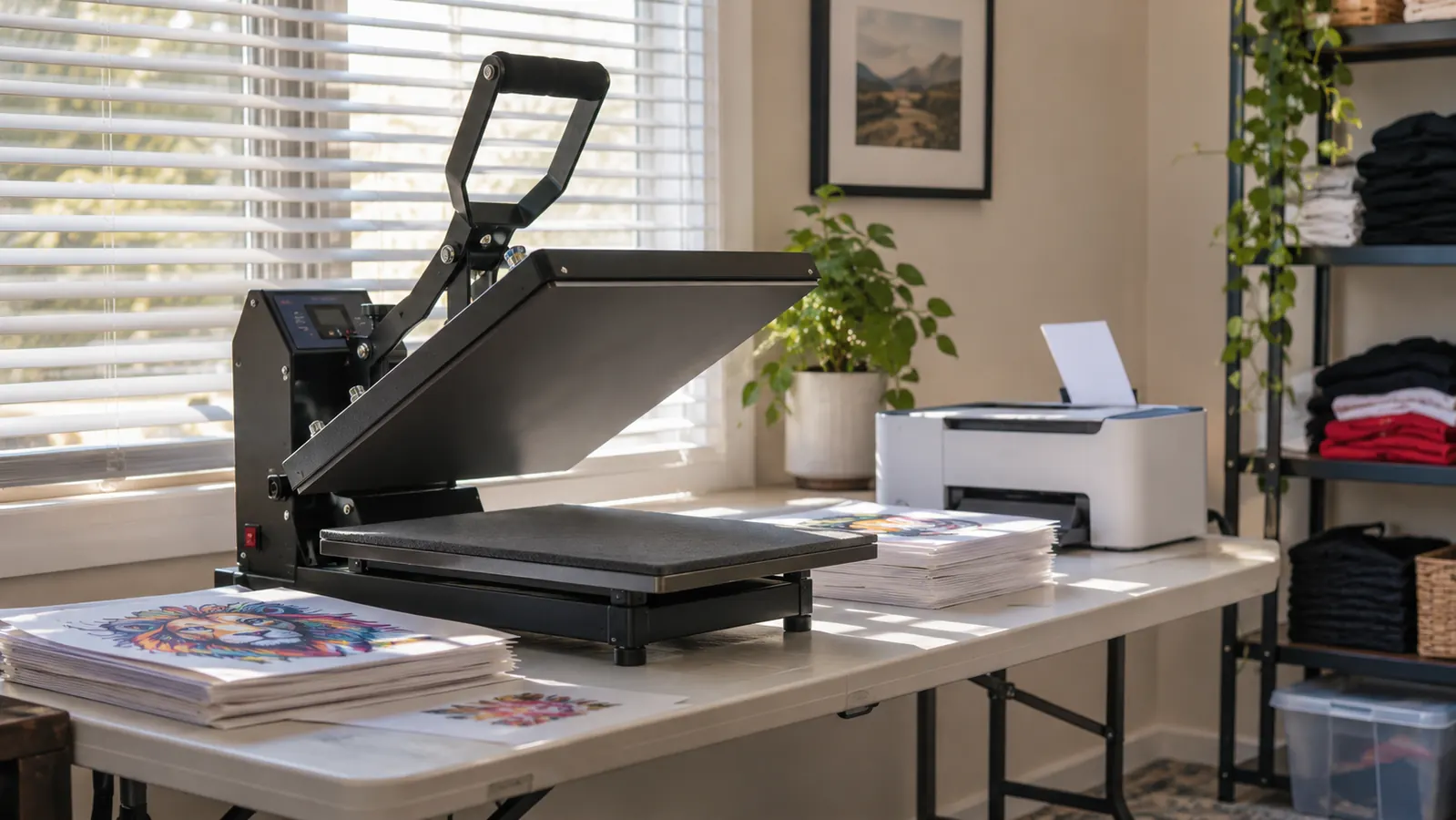
The question usually arrives late at night, from someone with two browser tabs open. One tab is a dedicated sublimation printer. The other is an Epson EcoTank and a bottle of third-party sublimation ink. The message is always some version of the same thing: which one, and why is this so hard to figure out. I understand the pull of both, because my first sublimation setup was a converted printer, and the machine in my press room now is a Brother.
So here is the short answer before the long one. If you want to be pressing shirts and tumblers this weekend, and you want one company to call when a print comes out wrong, buy the Brother. It is a dye sublimation printer rather than a document printer with different fluid in it, and the app that runs it was built for craft work, not for invoices. If you print heavy volume, you like the idea of bulk tanks, and the phrase dial in an ICC profile sounds like a pleasant Saturday, a converted EcoTank can serve you well and cost less to feed. Both answers are honest. Which one is yours depends on what is actually on your table.
What follows is the comparison I wish somebody had handed me at 11pm with my card already out. Not which machine is better in the abstract. Which one is better for the jobs you take.
| Brother Sublimation Printer | Converted Epson EcoTank | |
|---|---|---|
| Setup before the first good print | Design in the Artspira app, transfer, print, press, finish. One device, one afternoon. | Flush the lines, fill with third-party ink, build or buy ICC profiles, test, adjust, test again. |
| Warranty | Sold as a dye sublimation printer, so the limited coverage applies to how you are actually using it. | Converting voids the Epson warranty the day the first bottle goes in. |
| Cost to keep it running | Sublimation ink in four cartridges, replaced as each one empties. | Bulk tanks and third-party ink, which is the entire reason people convert. |
| Fine detail and gradients | A dye sublimation engine tuned for transfer output. Good, not a photo lab. | A photo-oriented printhead that handles gradients and small type with more finesse. |
| Design workflow | Artspira on your phone or tablet, with up to 20 printing images saved in the app. | Whatever desktop software and profiles you set up yourself, and remember to reselect. |
| When something clogs | You make one call, and the warranty is part of the conversation. | You read forums at midnight and hope a head cleaning brings it back. |
| Best for | Weekend fair volume, team shirts, mugs, tumblers, gifts. | High volume, oversized panels, and people who enjoy the machine side. |
What a Converted EcoTank Actually Is
An EcoTank is a printer with refillable ink tanks instead of cartridges. Converting one means buying sublimation ink, filling those tanks, and accepting that the printer is no longer the machine Epson sold you. The chemistry works. Sublimation ink on transfer paper, plus heat and pressure, turns to gas and bonds inside the fibers of a polyester shirt or a coated mug. That is the same process no matter who built the printer or what it was designed to do.
The step the videos skip is color. The first prints off a freshly converted machine usually come out dull, or shifted, or both. You need a profile matched to your ink and your paper, so you print a test chart, compare it against a reference, adjust, and print again. It is one evening of work, maybe two. That is not a reason to avoid it. It is a reason not to do it the week a booster club order is due.
My own conversion happened on a Tuesday in October, and I had told a neighbor I would have her daughter's birthday shirt done by the weekend. I printed the test chart four times. The fourth one was close. The shirt I pressed that Friday was still a shade off from the mug I had made to match it, and she was polite about it, which somehow made it worse. I remade both the following week on my own dime. That is the honest cost of doing the calibration while an order is already promised.
Then there is maintenance. Sublimation ink settles, and a printer that sits for ten days wants a head cleaning before a big run. On a machine you converted yourself, every clog feels personal, because the fix is on you. The Brother is the machine the manufacturer intended for this ink, and its support line has heard the question before.
Where Brother Wins
The advantage I did not expect was how quiet the ownership is. Printer, ink, app and support all come from one company. When a panel comes off with banding, I have one call to make. On a converted setup, the printer maker blames the ink, the ink seller blames the profile, and you are the person in the middle holding a half-printed mug wrap and a customer who wants to know when it will be ready.
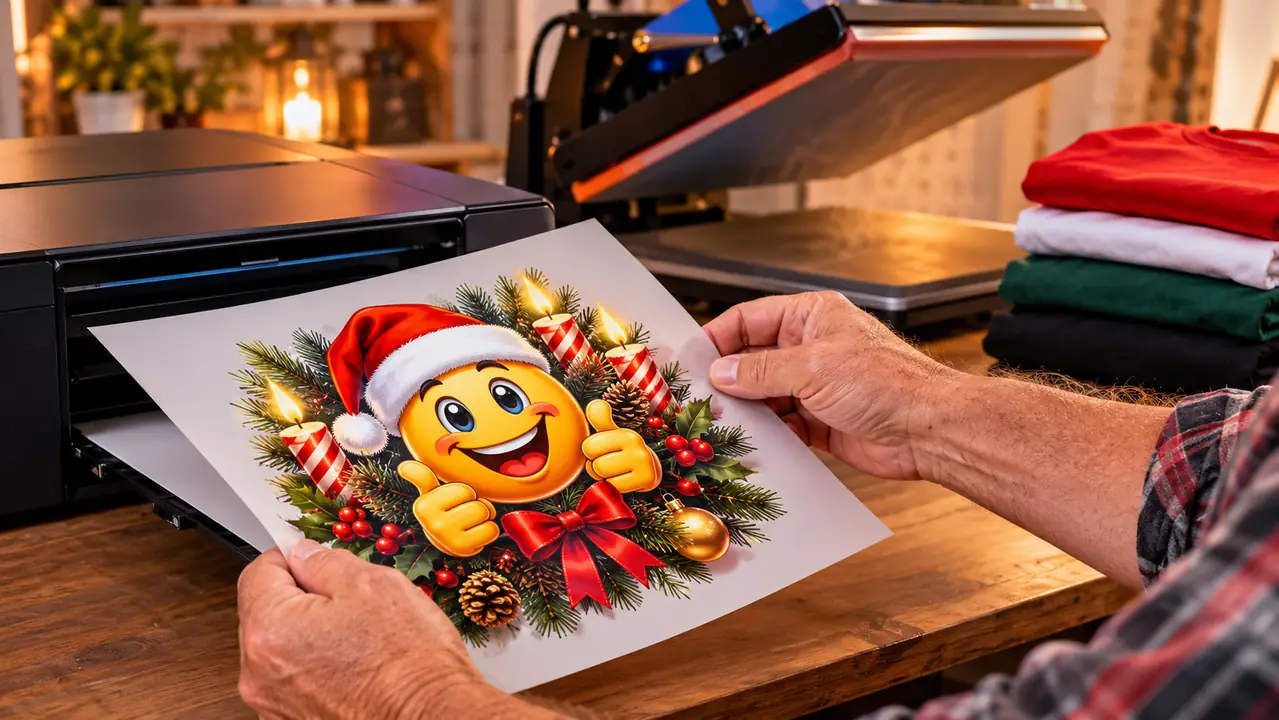
The Artspira app matters more than a spec sheet suggests. It saves up to 20 printing images, so my standard team logo, the mug wrap, and the shirt number set all sit there waiting. Create in Artspira, transfer, print, heat press, finish. On a Saturday with thirty shirts to move, fewer decisions is the whole game. I am not opening a laptop, opening a print dialog, and hoping the profile is still selected.
The warranty is limited rather than generous, and I will not pretend otherwise. The point is that it applies to how the machine is actually being used. Fill an EcoTank with third-party ink and that coverage is gone the day the first bottle goes in. On a machine that has to earn its keep at weekend fairs, that matters more than a slightly lower ink bill.
One small thing worth knowing. The unit is 7.9 pounds and measures about 20 inches wide, 19 tall and 11 deep. That is small enough to live at the end of a folding table in a spare bedroom without rearranging the furniture, which is exactly what happened in my press room.
There is also the screen. It has an LCD display and a touch control method, so the handful of settings I touch on a normal day are on the panel rather than buried in a menu tree. I am not going to pretend I use it for anything clever. I use it to confirm what is loaded and to start the job, and on a morning when I am already late setting up a table, that is enough. The listing also names scan among the additional functions and iOS among compatible controllers, which are the kind of extras you notice later rather than at checkout.
Where the Converted EcoTank Wins
Ink cost, plainly. Bulk tanks and third-party ink are the entire reason the conversion exists, and if you print steadily the difference is real. Nobody converts a printer for entertainment. They do it because the tanks hold a lot and refilling is cheap.
Fine detail. The photo-oriented Epson printheads are genuinely good at gradients, at skin tones in a photo collage, and at small elegant type. On a memorial mug with a poem set in a light serif, you may see the difference at reading distance. On a shirt with a school logo and a last name across the shoulders, you will not.
Large panels. Some EcoTank models print well past what a compact desktop craft machine will do, and if your work leans toward big panels, that one fact can decide the whole question before anything else is weighed. Check the maximum print size on both machines before you buy. It is the number I would refuse to guess at on your behalf. I learned that one the hard way with a canvas tote order: I assumed the artwork would fit, taped the transfer down, and discovered on the second panel that the printable area stopped short. I ended up splitting the design across the front and back and calling it a feature.
Repair knowledge. A converted EcoTank is a common machine with a deep archive of forum posts behind it. If something goes wrong after any warranty has run out, someone online has seen your exact symptom and written down what fixed it.
The month I spent calibrating a converted printer was a month I did not spend pressing shirts. That ratio is the whole decision.
Stop calibrating and start pressing
The Brother Sublimation Printer is a dye sublimation machine with the Artspira app built around it. Design, transfer, print, heat press, finish, and one support line when something looks off.
Amazon Check Today's Price on Amazon →
Print Quality Once It Is Pressed and Washed
On a flat color panel, the converted EcoTank has the edge in smoothness. On the work that actually sells at a Saturday fair, the gap is smaller than the internet suggests. Team numbers, a mascot, a mug wrap, a photo of somebody's dog on a tumbler. Both machines put down enough ink to make those look right, and the pressing matters more than the printer does.
What ruins prints is boring. Paper that absorbed humidity in a spare bedroom. Too much pressure, which flattens the image and leaves a hard edge around the transfer. A shirt that still has sizing in it, which repels the gas and leaves a faded square. I have done all three, one of them on a stack of youth shirts I had to remake. The Brother did not cause any of it.
The repeatable advantage is consistency on a reorder. When a booster club comes back for twelve more shirts three weeks later, the saved design in the app is the same file, printed the same way, with the same ink. On a converted setup with hand-built profiles, a reorder is also a small test of your own notes.
I keep a wash test going, because customers ask and I would rather know than guess. One shirt from every new blank supplier gets washed twenty times on a normal cycle with the rest of the laundry, and I check it against a spare I never washed. The first batch of a cheap blend I tried faded at the collar seam around wash eleven. The prints off the Brother were fine on the same blank; the blank was the problem, and the test told me that before a customer did. It takes one shirt and about three weeks, and it has saved me two bad bulk buys.
What Sits Around the Printer Matters More
Whichever machine you pick, three things decide whether a print survives ten washes. The blank, the paper, and the press settings. A shirt needs to be polyester or a blend with a high poly count, and the supplier will usually state the percentage. Cotton will take the ink and then lose it in the first wash. That is chemistry, not a printer fault.
Transfer paper matters too. Cheap paper releases unevenly and leaves a ghost outline around the image. The press needs enough heat, enough time, and enough pressure to hold the sheet flat without crushing the fabric weave. I keep a notebook with the settings that worked for each blank I buy, because I will not remember in three weeks and guessing wastes blanks.
Humidity is the quiet one. Paper stored in a damp garage prints blotchy. My press room is a converted spare bedroom in a house in Vancouver, Washington, and in February that paper wants to live sealed in a bin with a dry pack. True for both machines. True for every printer anybody will ever sell you.
Who Should Buy Which
Buy the Brother if your work is shirts, mugs, tumblers, totes and small panels, ordered in batches of five to fifty, and you want the equipment to disappear into the background. Buy it if you would rather learn heat press settings than color profiles. Buy it if the idea of one vendor blaming another vendor while your order sits half finished sounds exhausting rather than interesting.
Buy a converted EcoTank if you print in volume, you want the lowest running cost you can get, and you are comfortable with profiles and head cleanings. Buy it if you genuinely enjoy the machine side of the hobby, because you will be spending real time there. Buy it if your work runs to big panels and you have confirmed that the specific model you are eyeing prints the size you need.
Do not buy either one if the plan is to print on cotton. Sublimation needs polyester or a poly-coated blank, and no printer on the market changes that.
If you are still unsure, look at your last three orders. If they were school shirts and gift mugs, the Brother is the quieter path and you will be pressing within an hour of unboxing. If they were oversized photo panels and you were already reading about profiles before you found this page, you know which way you are leaning. Trust that.
And if you are still at the very beginning, before any of this, do one small paid job first. One shirt for a neighbor, one mug for a teacher, whatever gets a finished item in your hands and a real reaction. Four years in, that is still the part that keeps me loading the car on a Saturday morning, and it is a better test of whether this suits you than any spec sheet I could hand you.
One machine, one ink, one phone call
If your orders are school shirts, gift mugs and team tumblers, the Brother keeps the equipment boring so the work stays fun. Current price and stock are on the listing.
Amazon See Today's Price on Amazon →