Four years ago I made twelve matching shirts for a family reunion. I borrowed a press, cleared off the dining table, and by Sunday night I had eleven good shirts and one with a scorched collar that I still keep in a drawer to remind myself what rushed work looks like.
What surprised me was not that I enjoyed it. It was that other people asked me to make theirs. A neighbor wanted shirts for her son's team. Then a teacher. Then the booster club, and that one arrived as a real order with a number and a deadline attached.
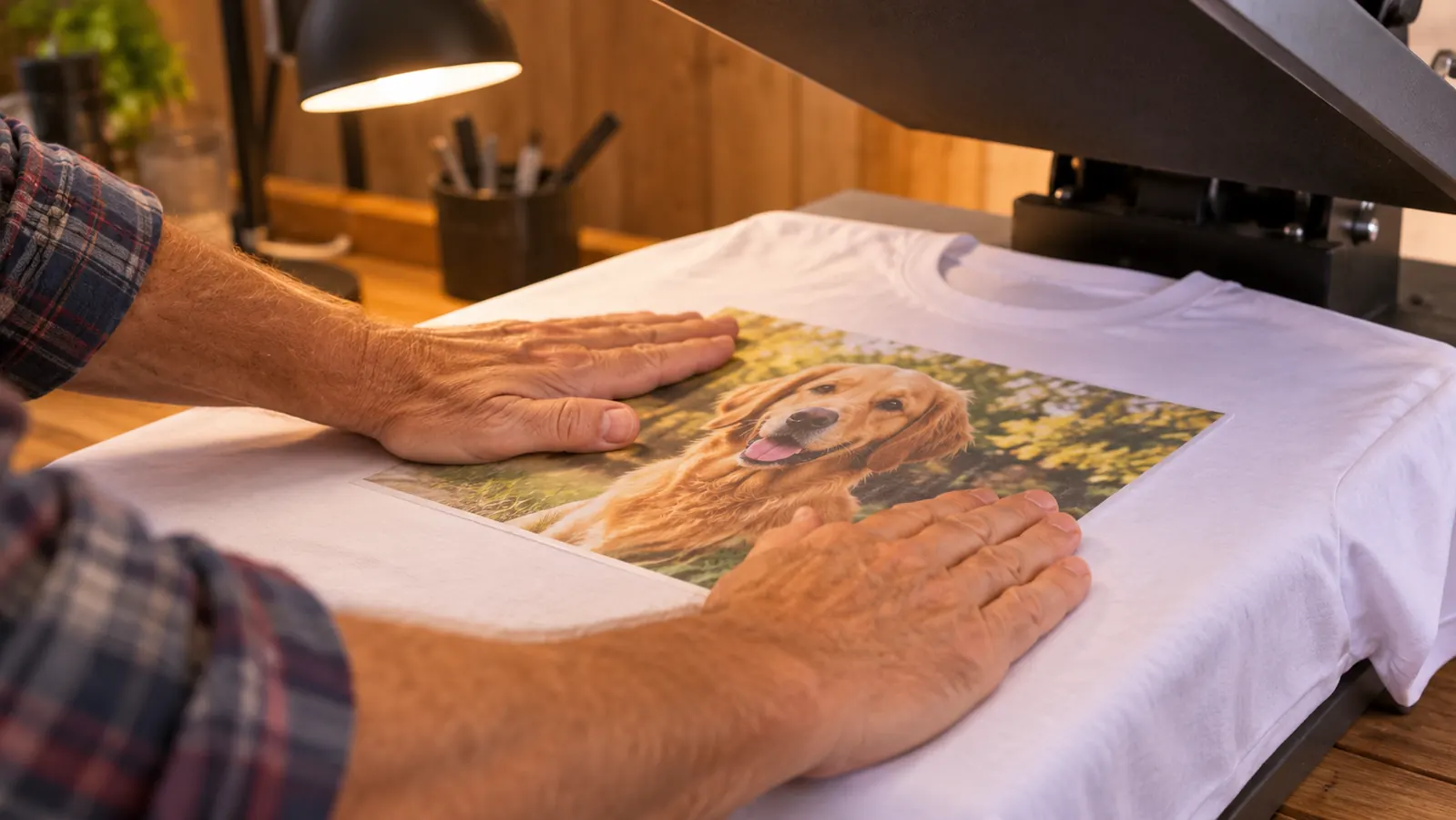
I work out of a converted spare bedroom now. I call it the press room. But the thing that actually made this manageable was not talent and it was not marketing. It was getting my hands off the handle of a manual press. That is the honest reason I ended up with the HTVRONT auto heat press.
Before that I spent a year fighting a manual clamshell. Press down, hold, count, lift, peel. Do that forty times in an evening and your shoulder lets you know. The worse problem is the shirts. Your arm gets tired around press number twenty and the pressure quietly changes, so the last half of a batch does not match the first half.
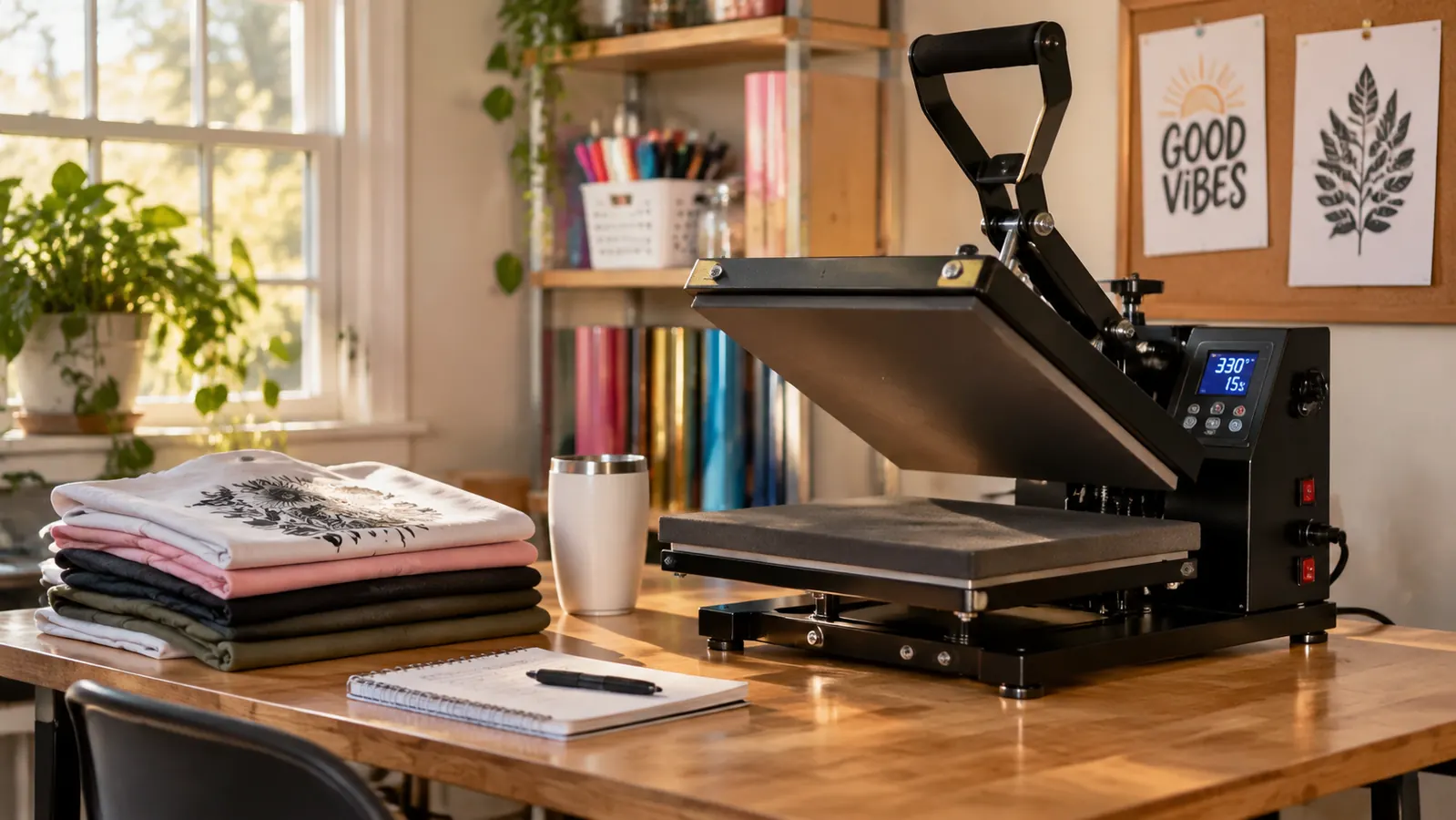
The HTVRONT press is 15x15 inches and it does the pressing itself. You set the temperature, you set the time, you close the top, and the plate comes down and releases on its own. I have run it for two years now on shirts, tote bags, and the flat parts of mugs before I finish the wrap in a mug press.
The press does not make anyone a better designer. What it does is take away the one variable you were never going to control, which is how tired your arm was on press number thirty.
Two Years Later, This Is Still the Machine in My Press Room
A 15x15 inch platen, auto release, 4 fast modes, 2 custom modes and an auto mode. It is the piece of equipment I would buy again before anything else.
Amazon Check Today's Price on Amazon →Here is what I noticed in the first month. The plate reaches 320°F in about four minutes, which is enough time to lay out the transfer and trim it. On the manual press I used to stand there waiting with nothing to do.
The modes matter more than I expected. There are 4 fast modes, 2 custom modes and an auto mode. I keep custom settings saved for the cotton shirts and for the poly blend the youth team uses, and I use the fast modes for the small flat items like napkins and tote bags.
The auto release is the feature I did not think I needed. On a manual press you lift the handle yourself and the shirt sits there, hot, and one distraction is all it takes to scorch it. This one opens on its own and stops. I have walked back into the room twenty minutes later and found a shirt that was fine.
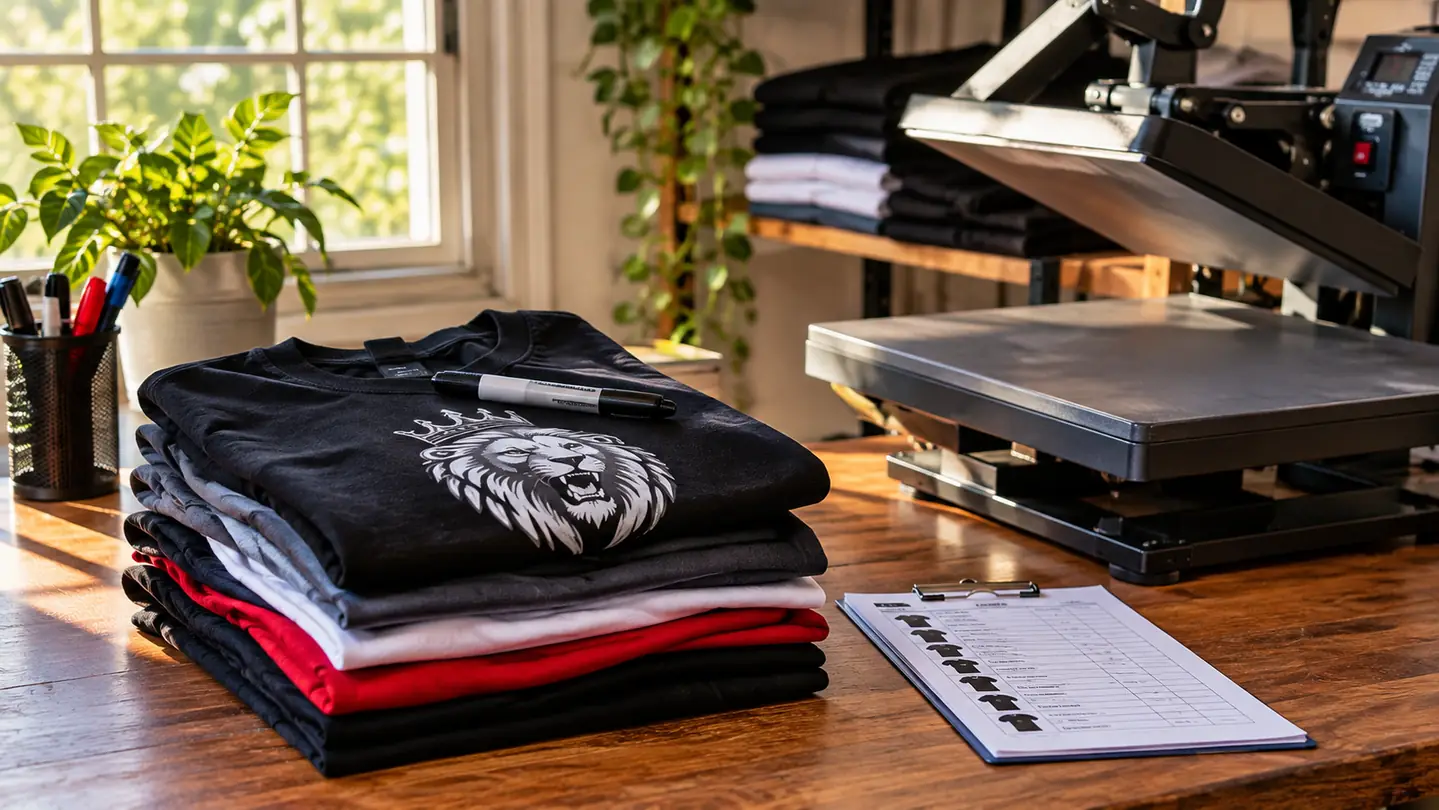
It weighs 40.3 pounds and measures 20 by 12 by 16 inches. That number matters when the machine lives on a table in a spare bedroom. This is not a press you tuck into a closet between projects. Mine has a permanent spot and I plan the room around it.
Things I do not love. The warranty is 30 days, which is short for something this heavy, and I would rather say that out loud than have you discover it later. Setting it up took me most of an afternoon, mostly because I read the manual twice and then ignored half of it.
The working area is 15x15 inches. That handles a full adult front print. On a big back print you work in two passes, which is true of any 15 inch press and not a knock on this one.
What I'd Tell You If We Were Sitting at My Kitchen Table
If you are standing in your kitchen right now trying to decide whether to buy a press at all, here is what I would say. Buy the machine for the work you already have, not the work you hope to have. I bought mine after the booster club order, not before it. A press sitting idle in a spare bedroom is a very costly table.
Second, decide early what you will actually make. Shirts are the easy answer and they are also the most crowded. The orders that kept me going that first year were small and specific. Twelve shirts for a team. Thirty tumblers for a fundraiser. A batch of totes for a school event. The HTVRONT handles all of that. What it does not do is choose your designs or set your pricing, and no machine will.
Third, give yourself permission to ruin things. I scorched a collar. I peeled a transfer too early and watched the whole thing lift. I pressed a shirt with a fold down the middle of it. Every one of those was a short lesson and none of them cost me a customer, because I checked the work before it left the house.
What I have now is a small operation in a spare bedroom that covers its own costs and gives me something to look forward to on a Saturday morning. That is the whole of it. I am not going to tell you it will replace a job, because mine did not replace the years I spent behind a school front-office desk. It replaced the evenings I used to spend watching television.
If the Booster Club Order Is Already on Your Kitchen Table, Start Here
Measure your work table first, then read the listing. 40.3 pounds wants a sturdy, permanent spot and a clear few feet around it.
Amazon Check Today's Price on Amazon →