
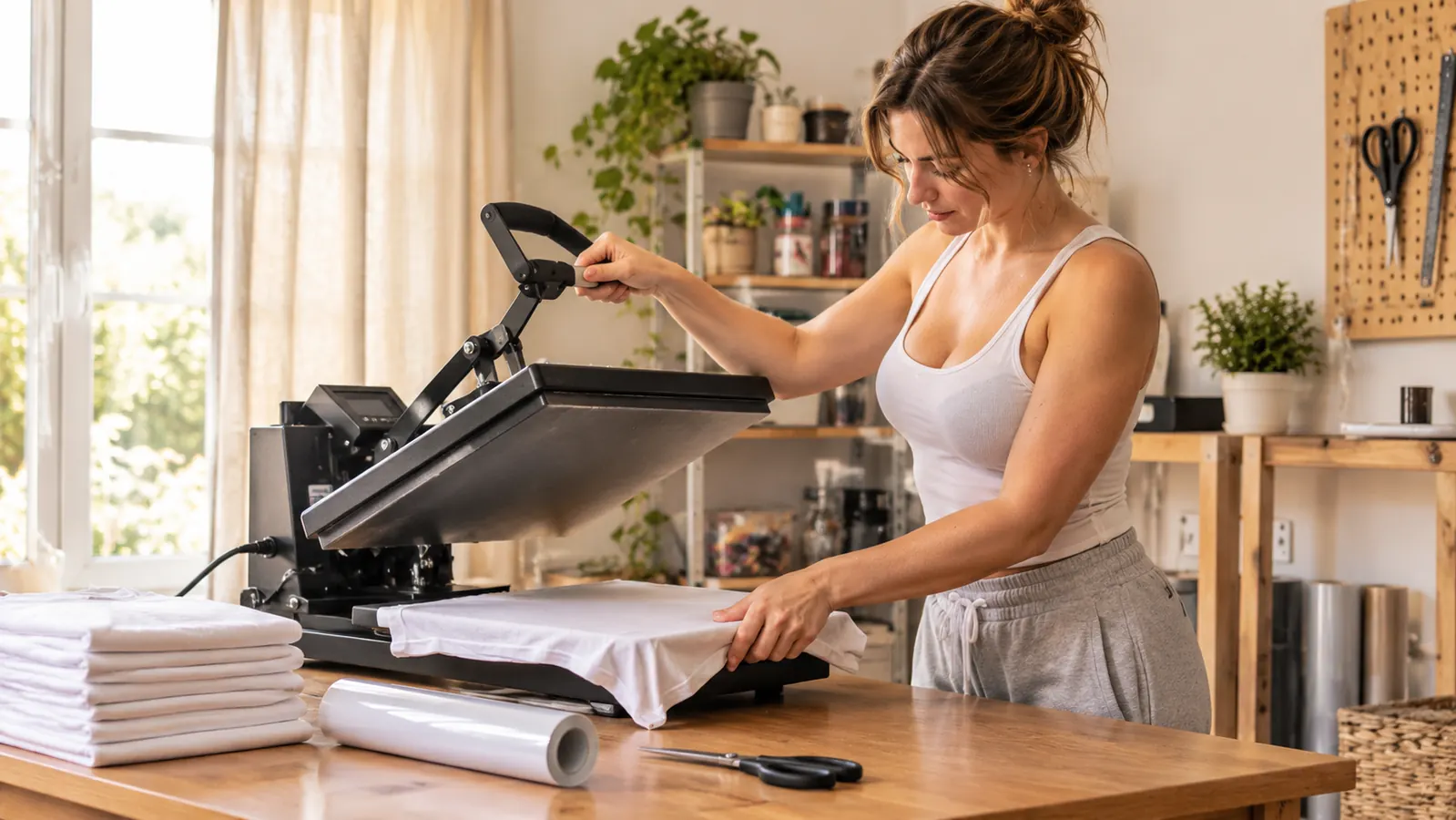
I bought a manual clamshell press first. It was the sensible choice at the time. It did the same job as the presses in every tutorial I watched, it sat on a folding table in my spare bedroom, and it did not ask me to trust a motor with a shirt I had already been paid for. Four years later that clamshell is folded up in the garage and an HTVRONT Auto Heat Press sits where it used to be, in the room I call the press room.
So this is a fair comparison, not a takedown. A manual clamshell is a real press and plenty of people turn out good work on one. The question is narrower: which one fits a beginner who is learning the craft, taking small orders from a booster club or a youth team, and pressing on a Saturday when there is nobody else in the house to lift a handle. My answer, after pressing on both, is that the HTVRONT Auto Heat Press suits the person taking repeat orders, and the manual clamshell suits the person pressing a few shirts for family.
| HTVRONT Auto Heat Press | Manual Clamshell (Fancierstudio 15x15) | |
|---|---|---|
| Upfront cost | Higher to start, because you are paying for the motor and the auto release | Lower to start, and used ones come up often |
| Pressure consistency | The machine applies its own pressure, the same way on shirt one and shirt twenty-four | Pressure comes from your arm, so it changes as you get tired |
| Hands free during a cycle | The plate releases on its own, so you can trim the next design while it finishes | You lift the handle yourself at the end of every single cycle |
| Thick or uneven stacks | Applies its set pressure and does not negotiate | You can feather the handle for a lumpy stack of layers |
| Repeat settings for team orders | Four fast modes and two custom modes hold the settings you use most | You enter time and temperature again each session |
| Warranty | 30 days, per the listing | Varies by brand, so read it before you buy |
| Bench space and weight | 40.3 pounds, 20 by 12 by 16 inches | Similar footprint, plus clearance behind it for the handle to swing |
| Noise | A motor runs during the cycle | Silent, nothing moves unless you move it |
| First week learning curve | Pick a mode, load the shirt, press start | You set pressure by feel, count the seconds and lift the handle |
Where the HTVRONT Auto Heat Press Wins
Pressure is the thing nobody warns a beginner about. On a manual clamshell, pressure comes from your arm. The first shirt of the morning gets a firm, even pull. The twenty-second shirt gets whatever your shoulder has left, and the vinyl tells you about it later, either as a corner that lifted or a design that looks a little shinier than the one before it. The HTVRONT press applies its own pressure, so shirt one and shirt twenty-four get the same squeeze without me thinking about it.
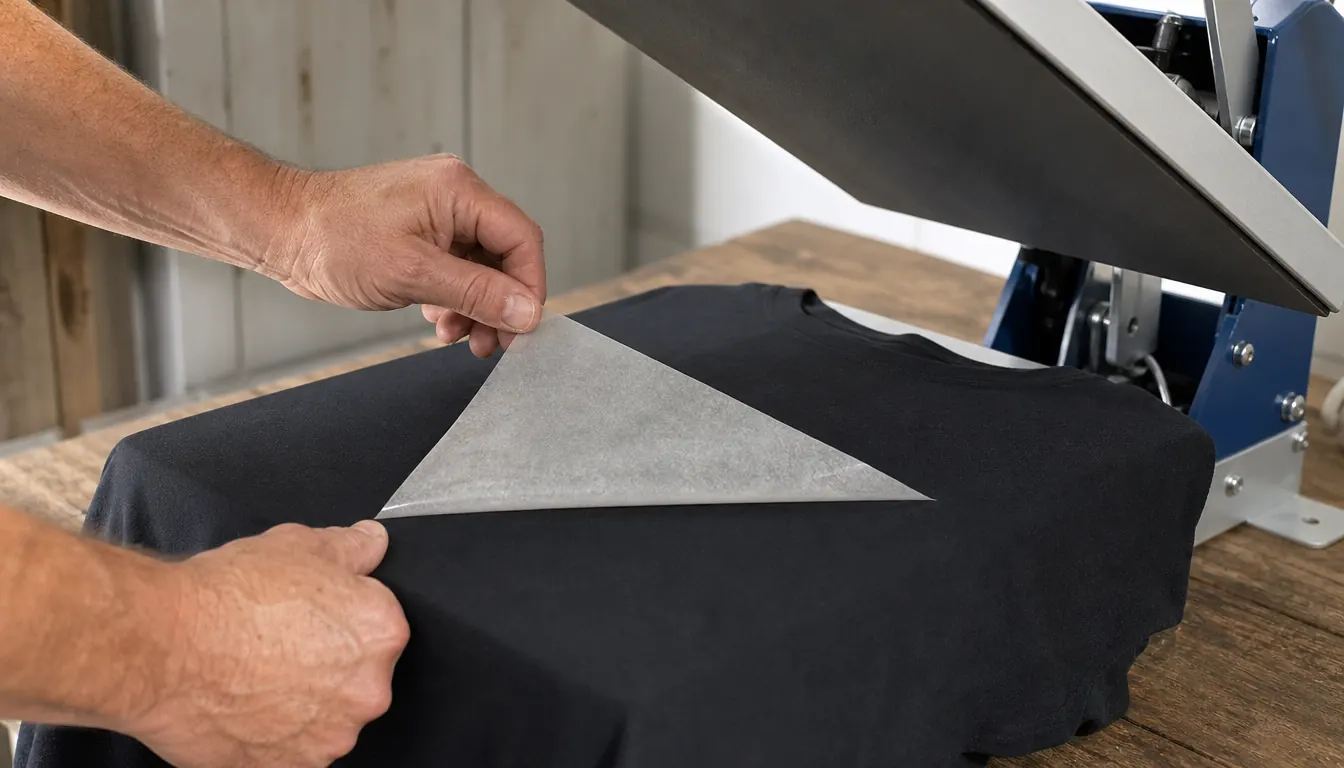
The auto release is the feature I did not think I needed. When a cycle ends, the plate lifts on its own. I use the seconds that follow to trim the next design or peel a transfer off its carrier sheet instead of standing there with my hand on a handle. If you have ever burned a shirt because someone walked into the room at the wrong moment, you already know what that difference is worth to a one-person operation.
The machine also takes the guesswork out of settings. It has four fast modes, two custom modes and an auto mode, which is more than a beginner needs on day one and exactly right by month three, when you are pressing the same booster club order for the fourth time and want the settings to come back the same way they did last time. It reaches 320°F / 160°C in about four minutes, and the temperature range runs from 160°C to 210°C, which covers the transfer vinyl and the sublimation blanks I actually buy.
Last October a booster club ordered thirty shirts for a youth football team, names on the back and numbers on the front. On the clamshell that would have been a full day with my hand on the handle, and by shirt twenty my pressure would have drifted without me noticing. On the HTVRONT I set the cycle going, trimmed the next name while the plate was down, and pulled the shirt the moment it lifted. I started at nine in the morning and had the whole order folded in a box by half past two, with a proper lunch break in the middle. The surprise was not the speed. It was that shirt thirty looked exactly like shirt one, and I was not tired at the end of it.
Where the Manual Clamshell Wins
The clamshell wins on the thing that stops most beginners: the cost of getting started. You get a flat platen, a heating element and nothing else, and you pay accordingly. If your plan is to make matching shirts for a family reunion, press a dozen tote bags for a school fundraiser and then decide whether you even like this work, the manual press gets you there for less and you can sell it on when you are done.
It also handles a lumpy stack better than the auto press does. When a customer wants a thick hoodie with a folded seam and a patch underneath, I can feather the handle and give it just enough pressure. The motor applies its set pressure and does not negotiate. And the clamshell is silent, which matters more than it sounds like it should when you press in a spare bedroom with the rest of the house on the other side of the wall.
The last point, and I would rather say it straight: the HTVRONT listing describes a 30-day warranty, and 30 days is short for a machine with a motor in it. A manual clamshell has fewer parts to fail, and when something does go wrong it is usually a heating element or a thermostat that a repair shop can look at. That is a genuine mark in the manual press column, and you should weigh it before you buy either one.
The press that finishes the cycle while you trim the next design
Auto release lifts the plate at the end of every cycle. Four fast modes, two custom modes and an auto mode, warm in about four minutes. Check today's price and the full spec sheet on Amazon.
Amazon Check Today's Price on Amazon →What the Modes Actually Do on a Beginner's Bench
Modes sound like a marketing list until you are on your fourth team order. The four fast modes are starting points for common work. The two custom modes are the ones you set yourself, and they are what I use for the specific shirt blank I buy in bulk, because I know exactly what that blank wants. Auto mode is the one I leave it on for anything I press more than twice, because the cycle runs and the plate lifts without me standing over it.
What I would tell a beginner is to put a strip of masking tape on the bench and write on it which custom mode is which, at least for the first month. The custom modes are only useful if you remember which one belongs to the cotton tee and which one belongs to the poly blend. I ran them unlabeled for a month and pressed a polyester performance shirt with the cotton setting, and the shirt came out with a shine across the chest that does not wash out. Performance fabric is less forgiving than the basic cotton I learned on. Once the tape went on the bench, that mistake stopped happening.
What I would not do is buy this machine as a beginner and start in auto mode on a blank you have never pressed. Press a scrap first. Every vinyl, every blank and every transfer sheet has its own idea of what it wants, and a machine that repeats a setting perfectly will repeat a bad setting perfectly too. The press removes the inconsistency from your hands. It does not remove the need to write down what worked.
I scorched a stack of youth soccer jerseys because I walked away from a handle. That is the whole reason an auto release matters to me.
Three Mistakes I Made Moving From One to the Other
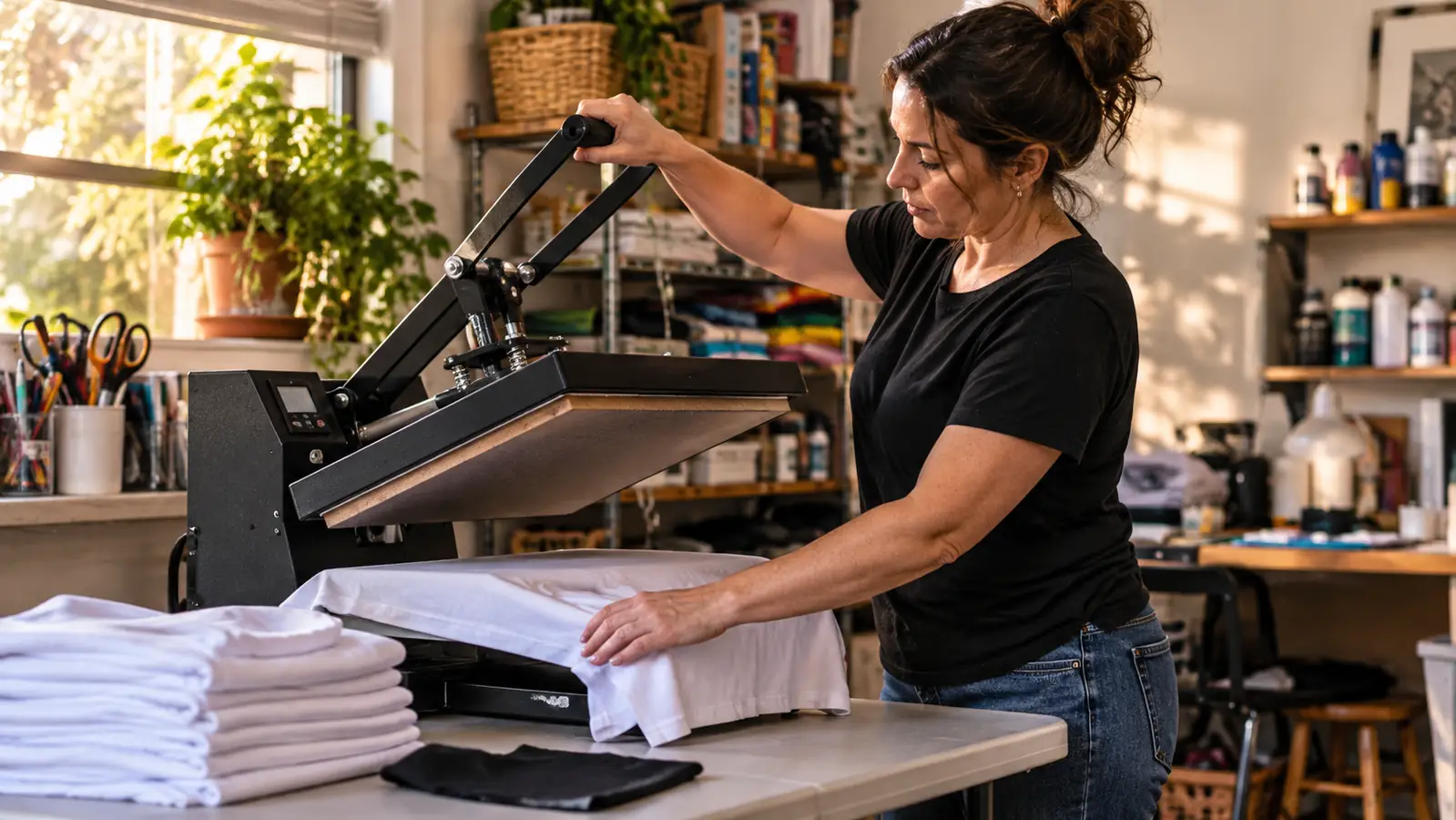
The first mistake was on the manual press, years before I bought anything automatic. I set a cycle going, went to answer the front door, and came back to a stack of youth soccer jerseys with a scorched imprint and a smell I can still picture. It was not a machine fault. It was a handle that stayed down because nobody lifted it. Every reason I care about auto release traces back to that afternoon in my second year of pressing.
The second mistake was assuming the automatic press would fix everything. My first week with it, I loaded a thick hoodie with a folded seam and pressed it exactly the way I pressed a cotton tee, because the machine did it the same way every time and I trusted that. It came out with a hard edge where the seam sat, a line across the front that no amount of re-pressing would flatten. That hoodie lives in a drawer as a reminder. The fix was two scraps of the same blank, one folded the way the seam folds and one flat, pressed before anything a customer is paying for.
The third mistake was not writing settings down. For two years I kept temperatures in my head and got away with it because I was only pressing a few things. The week a booster club ordered thirty shirts with names on them, I could not remember whether the number vinyl wanted a different setting than the name vinyl, and I pressed the first three with the wrong one. Now there is an index card taped inside a cupboard door for every blank I use, with the mode and the time written in pencil so I can change it without starting a new card. It takes ten seconds to check and it has saved more shirts than any other habit I have.
Space, Weight and Where It Lives
The HTVRONT weighs 40.3 pounds and measures 20 inches long, 12 inches wide and 16 inches high. It is not a machine you put away in a closet between orders, and it should not be, because lifting it onto a shelf is how you drop it. Mine sits on a solid bench in the press room and stays there. It runs on 120 volts, so a normal household outlet is enough, provided that circuit is not already carrying a space heater.
I measured the room before I bought anything, and I am glad I did. The bench is six feet long and two feet deep, under the window, with the press at one end so the heat does not sit right next to the roll of vinyl. Between the press and the wall there is a gap the width of my hand, enough for the cord to run down and not enough for anything to fall behind. On the clamshell that gap had to be much wider, because the handle needs room to swing back and up. On the automatic press it is just tidiness, and I have come to appreciate tidiness in a room where finished orders wait on the other end of the bench to be bagged.
A manual clamshell takes a comparable amount of bench, but you need clearance behind it for the handle to swing up. In a spare bedroom, that clearance is the thing that decides where the bench goes. On the automatic press the plate lifts within its own footprint, which is how I got a cutting mat and a small trim station onto the same bench.
Who Should Buy Which
Buy the HTVRONT Auto Heat Press if you are pressing the same thing more than a handful of times. Team names and numbers, a stack of shirts for a craft fair, repeat orders where the customer expects the tenth shirt to match the first. It also suits anyone who presses alone, because you cannot trim, peel and answer the phone while your hand is holding a handle down. That is the honest case for it, and it is the reason mine stayed.
Buy the manual clamshell if you are testing the water. Making gifts, pressing a few shirts for your own family, working to a tight budget, or pressing thick awkward stacks where you want to feel the pressure rather than trust it. It is also the better choice in a shared room where noise matters. Neither press is a mistake. They just suit different Saturdays.
If you have to press the same shirt thirty times, buy the press that does it the same way thirty times
The HTVRONT Auto Heat Press runs the cycle, releases the plate and gives your hands back. Read the listing, check the modes against the blanks you actually buy, and press a scrap before you press a customer's shirt.
Amazon Check Today's Price on Amazon →